REVIEW · MEDELLIN
Comuna 13 & Downtown: From violence to innovation
Book on Viator →Operated by Colombian Ambassadors · Bookable on Viator
Medellín can change fast. In one 4 to 4.5 hour loop, I like how Plaza Botero drops you into art, then Comuna 13 shows how a neighborhood remade itself through design and creativity. Two things I’d pick again: the mix of public-transport views (metro, Metrocable, and bus) and the way the route makes the city feel practical, not just scenic.
One possible drawback: it moves at a good walking + transit pace, so if you want extra time in each stop, you may wish this lasted longer.
Your guide in the reviews is Sebastián, and he’s the kind of person who explains what you’re seeing in plain language, with a former city planner lens. The group stays small (max 9), which helps when you’re bouncing between levels, streets, and viewpoints.
In This Review
- Key things to know before you go
- Why this Medellín route matters: violence to innovation, by public transit
- Meeting in La Candelaria, then riding metro and Metrocable to change your perspective
- Stop 1: Plaza Botero and 23 works you can spot in ten minutes
- Stop 2: Graffitour Comuna 13, graffiti as a street-level history lesson
- Stop 3: Escaleras Eléctricas de la Comuna 13 and why infrastructure changed daily life
- Price and logistics: getting a full half-day without transit headaches
- What to expect from Sebastián’s guiding style and explanations
- Who should book this tour, and who might not love it
- My practical take: how to make this tour feel worth your time
- Should you book this Comuna 13 & Downtown tour?
- FAQ
- How long is the tour?
- Where does the tour start?
- Where does the tour end?
- What are the main stops?
- Is admission included for the stops?
- What’s included in the price?
- Is alcohol included?
- How big is the group?
- Does the tour depend on weather?
- Can I take a taxi or Uber after the tour?
- What’s the cancellation policy?
Key things to know before you go
- 23 Botero works in one quick stop at Plaza Botero, with free entry and zero waiting time.
- Graffiti route + major gallery time in Comuna 13, designed to show how art fits the neighborhood.
- Electric stairs as infrastructure—not just a photo stop—so you understand why it matters.
- Metro + Metrocable + bus included in the ticketed portion, so you’re not figuring out transit on your own.
- Snacks and soda/pop included to keep energy steady during the ride-and-walk rhythm.
Why this Medellín route matters: violence to innovation, by public transit
This tour isn’t about sitting in a van and getting handed highlights. You’ll get a real Medellín feel by using local transit the way people actually do: metro, then Metrocable, then a bus segment, plus short walks between key points. That matters because Comuna 13 isn’t far away on a map—it’s far away in daily life, street layout, and history.
The theme is clear: from violence to innovation. You’ll see it through three different lenses—classic sculpture, street art, and city infrastructure. The overall effect is that you stop thinking of Comuna 13 as a single “attraction” and start seeing it as a place shaped by decisions: design, movement, access, and community expression.
And for $39, the value comes from more than the guide. Transport tickets are included, plus snacks and soda/pop, and every stop has free admission as listed in the schedule.
Other Comuna 13 graffiti tours we've reviewed in Medellin


Meeting in La Candelaria, then riding metro and Metrocable to change your perspective
You start at the Basilica of Our Lady of Candelaria in La Candelaria (C. 50 #49 – 112). From there, the tour is built around getting you quickly into the city’s “up and down” geography using public transit. That’s one of the smartest ways to handle Medellín’s slopes—your legs do some work, but you’re not stuck doing steep stair-only routes.
Transit tickets included cover metro, Metrocable, and bus. In practical terms, that means one less thing to budget for and one less thing to plan on the day. If you’re short on time, this is also a fast way to see different Medellín zones without spending your whole afternoon zigzagging by taxi.
The tour ends at Graffitour13 in the Veinte de Julio neighborhood (San Javier), so it’s not a strict out-and-back. The easy option afterward is to take a taxi or Uber back to your hotel.
Tip: wear shoes you’re comfortable walking in, because you’ll be moving between stops and dealing with uneven sidewalk sections.
Stop 1: Plaza Botero and 23 works you can spot in ten minutes
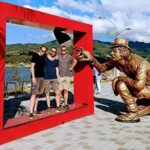
Plaza Botero is a classic Medellín introduction. You’ll spend about ten minutes here viewing 23 works by Fernando Botero, and admission is free for this stop. The timing is tight on purpose: this is a quick on-ramp to Medellín’s art side before you head into the neighborhood-level stories of Comuna 13.
What I like about this start is the contrast it creates. Botero’s style—big forms, strong silhouettes—gives you something obvious and memorable. Then, when you move on to graffiti and infrastructure, your brain has an easier time switching from “art as display” to “art as public voice.”
Even if you’re not a sculpture superfan, the plaza is a good warm-up. You get to orient yourself visually, pick out how public art is used in Medellín, and get your camera-ready without burning a huge chunk of the tour.
A drawback to note: ten minutes is not enough for a deep art session. If you want to linger, you’ll have to do it on your own after the tour, or plan another visit later.
Stop 2: Graffitour Comuna 13, graffiti as a street-level history lesson
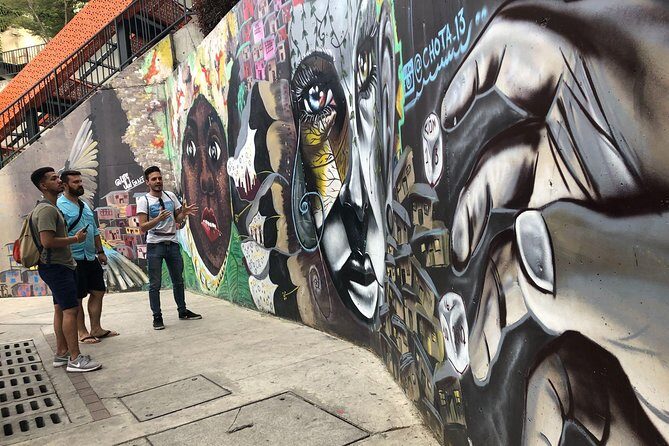
Next you head into Comuna 13 for a graffiti-focused visit called Graffitour. It’s about 30 minutes, and admission is free as listed. The idea is to cover a large amount of the street art in Medellín and also visit one of the more important graffiti spaces in Latin America.
This part works best when you treat it like more than pictures. Graffiti here is tied to the neighborhood’s lived experience: identity, resilience, and how people claim visibility in their own environment. A lot of the value is in the narration—how the guide helps you connect what you see on walls to the broader story of the area.
Sebastián’s explanations (from his city-planner perspective) are especially useful in this stop. He helps you connect art to the built environment: where murals appear, how the streets are laid out, and why certain spaces become “message boards.” That turns the graffiti from random street decoration into a readable language.
Possible consideration: if you’re the type who likes long gallery time, 30 minutes can feel short. The tour is designed to fit graffiti plus two other key Comuna 13 experiences into a half-day frame.
Stop 3: Escaleras Eléctricas de la Comuna 13 and why infrastructure changed daily life
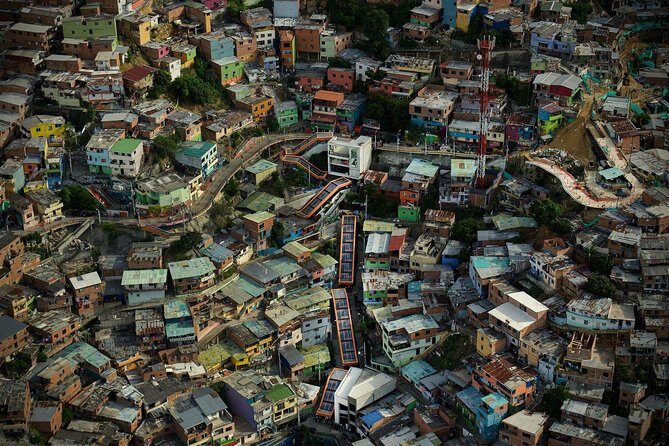
The final scheduled stop is the Escaleras Eléctricas de la Comuna 13. You’ll spend about 30 minutes here, and again admission is listed as free. These electric stairs aren’t only a “look up and take a photo” moment. They represent a larger shift in the city’s approach to infrastructure and innovation—especially in a place where elevation and access can make daily routines difficult.
In simple terms: these stairs help people move. When mobility improves, routines improve. And when routines improve, a neighborhood gains opportunities—work, school, social life, and access to the broader city.
What I appreciate is how this stop brings the tour theme full circle. The first stop introduces art in a formal setting. The second shows art in public space, tied to identity. The third shows practical innovation tied to movement and access. Together, you get a balanced picture: how creativity and design can both influence what life feels like on the street.
Photo note: go ready to look up and around. The stairs create natural angles for photos and viewpoints, but the real win is understanding why the system exists.



Price and logistics: getting a full half-day without transit headaches
At $39 per person for roughly 4 to 4.5 hours, this tour competes well with other city tours because it bundles the biggest friction points: transport and the core stops. Included items are soda/pop and snacks, plus metro, Metrocable, and bus tickets.
That affects value in a real way. If you attempted a similar route independently, you’d likely spend time planning transit transfers and paying for multiple segments anyway. Here, you can focus on seeing and learning, not troubleshooting the day.
What’s not included: alcoholic beverages. If you want a beer or cocktail with your day in Medellín, plan for that separately.
Group size stays small, max 9. That matters for two reasons: you won’t spend the tour stuck waiting on a large crowd, and you get better chances to ask questions when you’re moving between levels and viewpoints.
What to expect from Sebastián’s guiding style and explanations
In the reviews, Sebastián comes through as warm, friendly, and tuned in to how the city works. He doesn’t just list sights—he connects them. One key idea you’ll notice is how he frames history and politics through the lens of the built environment and urban planning.
That’s a big deal in Comuna 13, because the neighborhood story is tied to more than headlines. It’s tied to access routes, public services, and how the city invests in people where the terrain makes life hard.
You can also expect the tour to feel structured but not stiff. The stop order keeps you moving from Plaza Botero to graffiti to electric stairs without making any one section feel rushed beyond its planned time. And because the group is small, the pacing is easier to manage.
If you care about how urban design can change outcomes, this is the kind of tour that clicks fast. You’ll start noticing patterns—where art appears, how movement corridors matter, and how public spaces shape a community’s voice.
Who should book this tour, and who might not love it
This is a strong fit if you want:
- a half-day plan that covers three meaningful Comuna 13 touchpoints plus Plaza Botero
- a route that uses metro and Metrocable, so you experience Medellín’s transit system
- guided context that connects art, infrastructure, and the city’s story
It’s also a good choice if you’re someone who likes to get oriented quickly. You’ll see downtown/central start area energy, then shift to the hillside neighborhood perspective.
Consider skipping or thinking twice if:
- you prefer long time at museums or galleries (some stops are about 30 minutes)
- you’re traveling with very limited mobility needs, since you’ll be walking and using transit segments on uneven terrain
- weather is unstable, because the tour requires good weather. If it’s canceled due to poor weather, you’ll be offered a different date or a full refund.
My practical take: how to make this tour feel worth your time
Arrive ready to move. The tour’s value is in the full circuit: plaza art, graffiti storytelling, and electric stairs innovation. If you treat it like three separate stops instead of one connected story, you’ll miss the payoff.
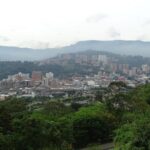
Also, keep an eye on the transport rhythm. Metro and Metrocable change your viewpoint instantly. You’ll feel the city’s vertical geography rather than just watching it from street level. When you match that physical shift with what Sebastián explains, the tour becomes easier to remember.
Finally, plan an easy evening afterward. Because you’re out for 4 to 4.5 hours, you’ll likely have energy for dinner but not for a second long neighborhood expedition.
Should you book this Comuna 13 & Downtown tour?
Yes—book it if you want a smart, guided half-day that links graffiti, public art, and innovation in one coherent route. The included transit tickets, free-listed admissions, and snack/soda stop costs are a big part of why it’s good value at $39.
Don’t book it only if you know you need lots more time in each stop or you prefer a slow museum-style pace. Otherwise, this is one of those Medellín experiences that gives you understanding, not just photos. It’s short enough to fit your schedule, and structured enough that you’ll leave with a clearer sense of how the city rebuilt itself through design and community expression.
FAQ
How long is the tour?
It runs about 4 hours to 4 hours 30 minutes.
Where does the tour start?
It starts at the Basilica of Our Lady of Candelaria on C. 50 #49 – 112 in La Candelaria, Medellín.
Where does the tour end?
It ends at Graffitour13 on Cra. 109 #38 a 11 in the Veinte de Julio neighborhood (San Javier).
What are the main stops?
You’ll see Plaza Botero, Graffitour in Comuna 13, and the Escaleras Electricas de la Comuna 13.
Is admission included for the stops?
The listed admission for each stop is free.
What’s included in the price?
Included are soda/pop, snacks, and tickets for metro, Metrocable, and bus.
Is alcohol included?
No. Alcoholic beverages are not included.
How big is the group?
The tour has a maximum of 9 travelers.
Does the tour depend on weather?
Yes, it requires good weather. If it’s canceled due to poor weather, you’ll be offered a different date or a full refund.
Can I take a taxi or Uber after the tour?
Yes. You can take a taxi or Uber back to your hotel after the tour ends.
What’s the cancellation policy?
You can cancel for free up to 24 hours in advance for a full refund. If you cancel less than 24 hours before, the amount paid is not refunded.