REVIEW · MEDELLIN
Comuna 4 Walking Tour Medellin
Book on Viator →Operated by Real City Tours · Bookable on Viator
Comuna 4 turns Medellín’s story inside out. On a Moravia-focused walk, you’ll trace how the neighborhood began in the 1960s, then hear the other side of the city’s transformation—through the people who lived it (Moravia, resistance, and rebuilding).
I especially love meeting community leaders like Gladys, who helped shape the neighborhood’s story firsthand. I also like how the tour connects big systems—like health care access, education, and the strata system—to what you see on the street. One consideration: this is a walking tour in a real neighborhood, so comfortable shoes matter, and the route includes uneven streets.
In This Review
- Key highlights you’ll actually feel
- Entering Moravia: why Comuna 4 feels different
- Meeting Toto and Gladys: community guides set the tone
- Price and Logistics: good value for a small-group, local-first tour
- Stop 1: Estación Metro Caribe and the Barrio Moravia origins
- Stop 2: Morro de Moravia and La Resistencia de Moravia
- Stop 3: Centro de Salud Moravia El Bosque and the health care reality check
- Stop 4: cigarreria la plaquita and football as identity
- Pause in the shade: Fundación Oasis Urbano and the strata/education story
- Stop 5: E.I. Fe y Alegría – Luis AmigÓ and the empanada break
- Stop 6: synthetic pitch Moravian and a resident story of resilience
- Stop 7: Moravia Cultural Center and community-built infrastructure
- Who should book this Comuna 4 walking tour
- Should you book this tour or choose something else?
- FAQ
- How long is the Comuna 4 Walking Tour in Medellín?
- How much does the tour cost?
- How many people are in the group?
- What’s included in the tour price?
- Is hotel pick-up or drop-off included?
- What is the meeting point and where does the tour end?
- Can I cancel and get a full refund?
Key highlights you’ll actually feel
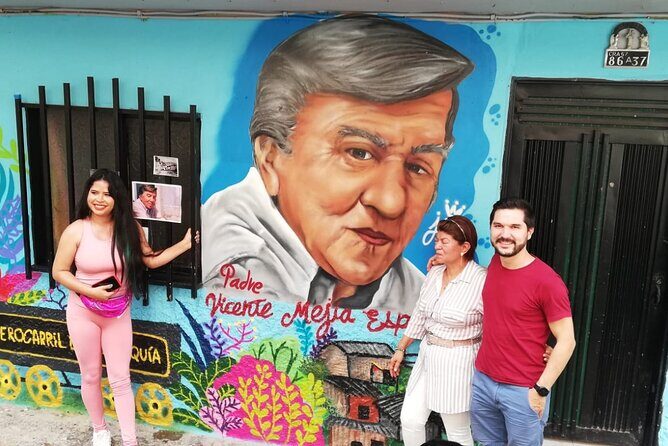
- Gladys’ first-person perspective on Medellín’s transformation, grounded in lived experience
- La Resistencia de Moravia viewpoint and the idea that some families resisted a government reallocation plan for over a decade
- Stop-and-talk moments about health care, street vending, and why almost half of Colombians don’t have access
- Football culture on the wall, with graffiti tied to the city’s major teams and the meaning it carries
- School and community hubs, including a snack stop and visits to local education and cultural spaces
- Small group size (up to 8) that makes it easier to ask questions and get real answers
Entering Moravia: why Comuna 4 feels different
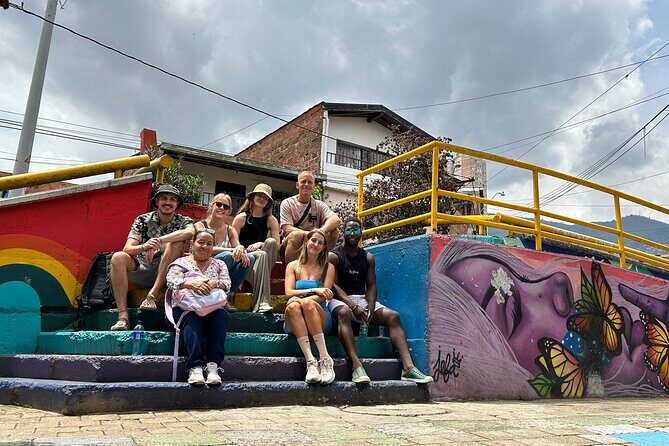
This tour doesn’t aim for postcard Medellín. It walks you through Barrio Moravia, a place many people know only as a headline or a cautionary tale. Here, the story is told by locals—so you get the version that lives in the neighborhood itself, not just the city’s press-friendly narrative.
The emotional center of the walk is not pity. It’s context. You’ll hear how Moravia formed in the 1960s as an illegal neighborhood, and then you’ll see how the city’s transformation played out differently depending on whose life it affected. That tension—between plans made elsewhere and realities lived here—shows up again and again as you move from stop to stop.
Other Comuna 13 graffiti tours we've reviewed in Medellin
Meeting Toto and Gladys: community guides set the tone
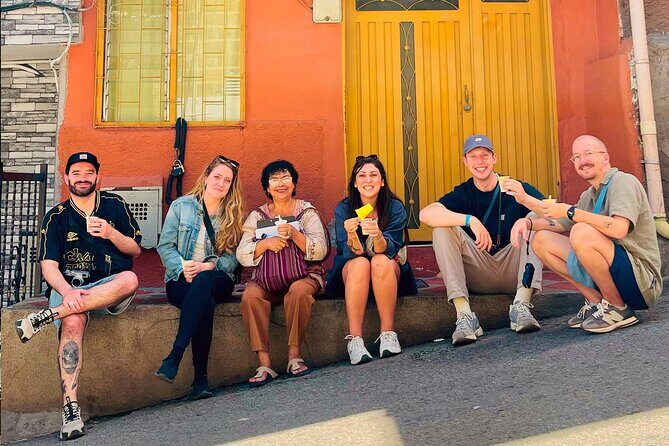
This experience is led by a professional bilingual tour guide from Real City Tours, plus a local community leader. In practice, that means you get two layers of clarity: one guide who can connect events and systems, and one resident who can explain what those systems felt like on the ground.
Names matter here, because you’re not just listening to general history. Toto brings the structure and pacing, while Gladys is a standout presence in the stories you hear—someone who lived through the early days and can explain what changed, what didn’t, and why. Several people highlight how moving and personal the tour feels when the neighborhood’s lived memory shows up in real conversation.
The upside of this format is also the safety valve. When the talk gets heavy—garbage, resistance, reallocation, health access—you’re not left hanging. The guides keep things clear, and they tie each stop back to how life actually works in Moravia.
Price and Logistics: good value for a small-group, local-first tour
At $35 per person for about 3 hours 30 minutes, this isn’t a bargain if you only care about check-the-box sights. But it’s strong value if you want something more useful: a guided walk with local leaders, bilingual interpretation, and a snack, for a neighborhood that’s complicated and easy to misunderstand on your own.
A few logistics points that help you plan:
- No hotel pickup or drop-off: you’ll start and end at the meeting point.
- Near public transportation: you’re not stuck trying to reach a remote spot with taxis.
- Max 8 people: that small group size helps the Q&A stay real.
Also, many stops come with free admission tickets, which keeps the cost focused on the guiding itself—not on piecemeal museum fees.
Stop 1: Estación Metro Caribe and the Barrio Moravia origins
You begin at Estación Metro Caribe, where your guide and the community ambassador meet you and set the historical context. This first stop matters because it frames everything that follows.
You’ll hear about Moravia’s origins in the 1960s, when it began as an illegal neighborhood. Then the conversation shifts to one version of Medellín’s larger transformation—how the city changed, improved infrastructure, and rebranded itself. The important part is that you’re not only learning dates. You’re learning how narratives get shaped.
Think of this as your map for the rest of the walk. Once you understand the starting point, the later stops about resistance and social services make more sense. You’ll also start noticing how different institutions—health, education, sports, cultural spaces—show up as tools for survival and dignity.
Stop 2: Morro de Moravia and La Resistencia de Moravia
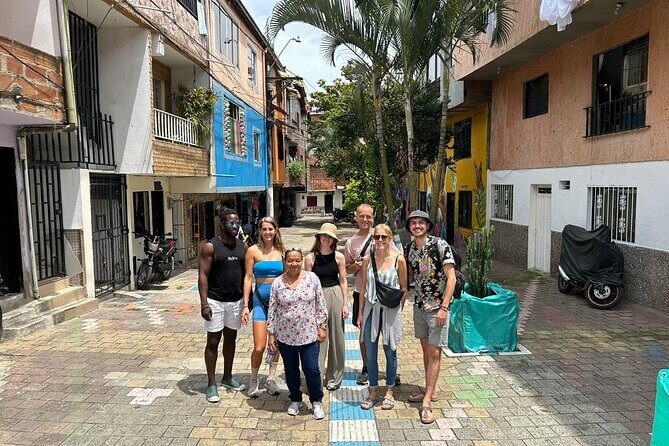
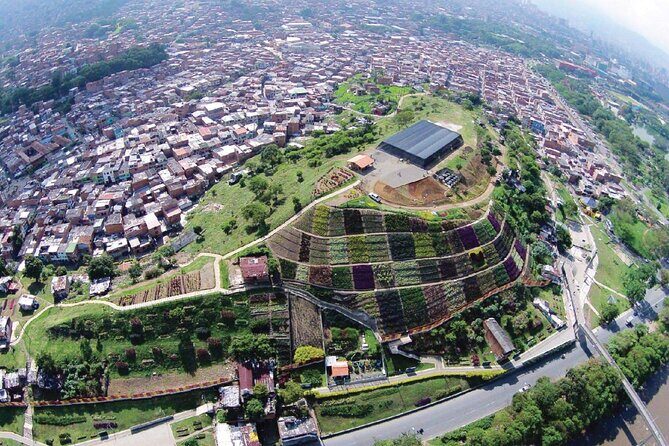
From the first stop, you move upward to Morro de Moravia. This is where the tour leans into its most distinctive theme: the other side of Medellín’s transformation—the version “no one talks about” as people put it.
Here, you visit La Resistencia de Moravia and learn why hundreds of families resisted a government reallocation plan for more than a decade. That sentence is powerful, and the tour helps you understand it without turning it into a shouting match. You’re shown how policy decisions made at a distance land very differently when you’re building a life block by block.
What I like about this segment is that it doesn’t reduce Moravia to victimhood or hero stories alone. Instead, it presents resistance as a rational choice: people fought for stability, for home, for the right to be part of the city’s future instead of being pushed out of it.
Other city tours we've reviewed in Medellin
Stop 3: Centro de Salud Moravia El Bosque and the health care reality check
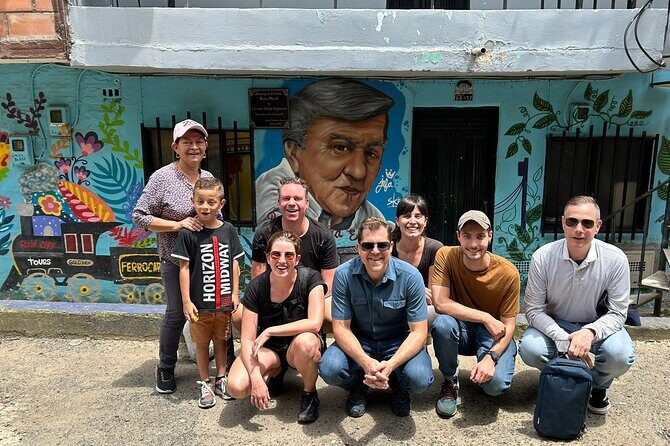
Next you head deep enough into the neighborhood to find a quieter place to sit and talk at Centro de Salud Moravia El Bosque. This isn’t just a stop to point at a building. It’s a conversation about the Colombian health care and welfare system—and the gap between policy and access.
This is where street-level observations connect to national numbers. You’ll hear why there are so many street vendors, and how it relates to the fact that almost half of Colombians do not have access to welfare/health coverage. The point isn’t to blame one institution. It’s to show how system gaps create daily workarounds.
For me, that’s one of the most practical parts of the tour. It teaches you how to read the streets. When you see people selling, begging, working, or improvising—this stop gives you a better framework than assuming it’s only about crime or disorder.
Stop 4: cigarreria la plaquita and football as identity
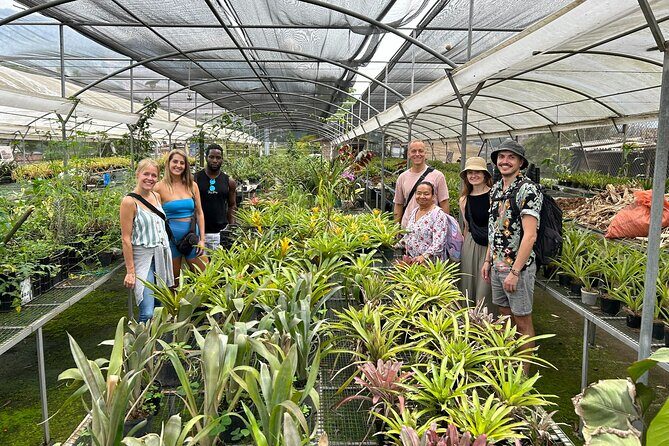
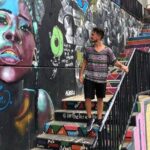
After the heavier policy talk, the tour shifts to culture. At cigarreria la plaquita, you’ll spend time looking at graffiti dedicated to the city’s most important football (soccer) teams.
It may sound like a brief detour, but it’s a smart one. In Medellín, soccer isn’t only entertainment—it’s identity, belonging, and community energy. The graffiti becomes a local language, showing how people attach pride and meaning to teams. When you understand that, it’s easier to see why a neighborhood’s social life can organize around sports, community events, and shared symbols.
This stop is short, but it adds texture. You come away with more than one story about Moravia—you get the rhythm of everyday culture.
Pause in the shade: Fundación Oasis Urbano and the strata/education story
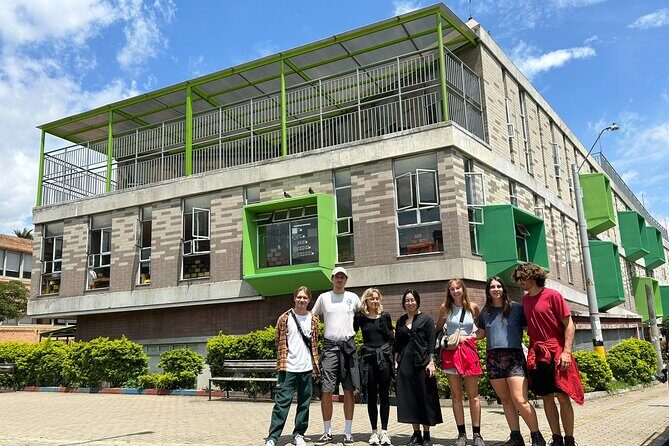
After a return to shade in front of Fundación Oasis Urbano, you explore two big ideas: education and the strata system in Colombia.
The strata system can be one of those topics that sounds abstract until someone explains it in the context of a neighborhood. Here, you’ll hear how it ties into how places and people are classified, and how that classification can shape access, opportunities, and the everyday cost of living. Education fits right into that, because it’s where you can see the future people are trying to build—even when systems are complicated.
This is one of the places where a small group helps. You can ask questions without feeling rushed, and the guides can tie national concepts back to what you just walked past.
Stop 5: E.I. Fe y Alegría – Luis AmigÓ and the empanada break
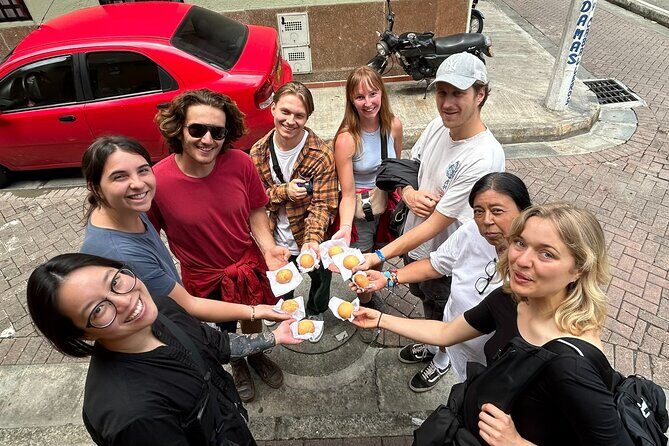
Now comes a simple but memorable reward: the tiniest yet most delicious street empanadas at E.I. Fe y Alegría – Luis AmigÓ.
This isn’t just a snack stop. It’s a moment that keeps the tour human. Schools and public-serving spaces often show the neighborhood’s priorities more clearly than any signboard. In a place working to build stability, something as basic as a warm, shared snack says a lot.
If you’re the type who worries about tours being all talking and no tasting, this is a good balance point. Expect a quick stop, eat something local, then keep moving.
Stop 6: synthetic pitch Moravian and a resident story of resilience
Next, you visit the football field—a synthetic pitch in Moravia—where you talk with the local ambassador and hear her story of resilience, resistance, and hope.
Sports fields can look like just another concrete patch until you realize what’s happening around them: a community creating a space for youth, for routine, for gathering, for pride. In this context, the pitch becomes a living example of why people keep investing in the future even when the past remains complicated.
This segment also reinforces something you learn earlier at La Resistencia. Resistance isn’t only protesting. Sometimes it’s continuing to build life anyway—staying, adapting, and claiming space in the city.
Stop 7: Moravia Cultural Center and community-built infrastructure
The tour finishes with Moravia Cultural Center, where you visit the cultural space and learn how the community built the infrastructure it needed.
This is where the walk starts to feel less like a lecture and more like a guided proof. You’ve heard about origins in the 1960s, about the transformation narrative, about long resistance, and about access to health and welfare. Now you see the physical results of community effort—places where people gather, learn, and express identity.
People often call this part the most powerful because it shifts you from problem-focused thinking to capability. Challenges are still real, but you can see how the neighborhood isn’t only reacting. It’s building.
Who should book this Comuna 4 walking tour
Book this if you want:
- A local-first perspective on Medellín that you won’t get from simple city sightseeing
- A guided explanation of Moravia’s transformation including the resistance side
- A tour that’s small group and built around conversation with community leaders
- Cultural context beyond murals and viewpoints, including soccer culture, education, and street-level economics
Skip it (or at least think carefully) if:
- You want mainly tourist sights, not neighborhood reality and policy discussion
- You prefer a low-walk plan with minimal stops
- You’re not comfortable in everyday local settings where people live, work, and speak honestly about difficult topics
Should you book this tour or choose something else?
I’d book it if you’re spending a day in Medellín and want one experience that actually changes how you read the city. The price feels fair because you’re paying for people-to-people guidance, not for a checklist of attractions. And with a maximum of 8 participants, you get the benefit of asking questions and getting direct answers.
The key question is your travel style. If you enjoy conversations, local context, and street-level understanding, this tour will feel worth every hour. If you only want scenic views and light stories, you might find it intense. For most visitors who want the real Medellín, Comuna 4 with Toto and Gladys is one of the best ways to make sense of Moravia.
FAQ
How long is the Comuna 4 Walking Tour in Medellín?
It lasts about 3 hours 30 minutes.
How much does the tour cost?
The price is $35.00 per person.
How many people are in the group?
The tour has a maximum of 8 travelers.
What’s included in the tour price?
It includes a local community leader, a professional bilingual tour guide, and a snack.
Is hotel pick-up or drop-off included?
No, there is no hotel pick-up or drop-off. You’ll meet at the start point and the tour ends back at the meeting point.
What is the meeting point and where does the tour end?
The tour starts at Barrio Transformation Tour, Av. Regional #Calle 78, Castilla, Medellín, Antioquia, Colombia, and it ends back at the same meeting point.
Can I cancel and get a full refund?
Yes. You can cancel for free up to 24 hours in advance for a full refund. If you cancel less than 24 hours before the experience starts, the amount paid is not refunded.