REVIEW · MEDELLIN
Medellin Historic Walking Tour with Expert Guide
Book on Viator →Operated by Real City Tours · Bookable on Viator
Medellín’s downtown story moves fast on foot. You’ll follow the city’s big turnaround—from the Old Train Station to public art squares—while bilingual guides like Germán and Carolina use clear storytelling (and plenty of humor). Two things I like a lot are the guide’s ability to connect major landmarks to real people, and the way the walk is paced so you’re not just staring at buildings. One possible drawback: if you’re sensitive to accents, you may find a guide’s pronunciation a little hard to catch on the first few stops.
This is a 3-hour walking tour at a very approachable $16 per person, and it stays small with a max of 18 people. You’ll finish at Parque San Antonio, a convenient spot for an Uber or a quick metro hop, so the day doesn’t get stuck in traffic.
In This Review
- Key highlights before you go
- A walk that turns Medellín into a timeline
- Starting at the Old Train Station: where Medellín modernized
- La Alpujarra and civic power: Medellín’s official heart
- Monumento a La Raza: concrete, bronze, and identity
- Plaza de las Luces: 300 pillars and the idea of a safer city
- Edificio Vásquez and Carré: architecture tied to social urbanism
- Paseo Carabobo: from noisy street to pedestrian green corridor
- Palacio Nacional: courts and jail now turned into art and coffee breaks
- Galería de Arte Palacio Nacional: local art, not tourist-only
- Iglesia de la Veracruz: religion, modern contradictions, and perspective
- Plaza Botero: 23 sculptures and Fernando Botero’s role in renewal
- The main art museum and the Belgian architect connection
- Parque Berrío: Pedro Nel Gómez frescoes and the Metro’s meaning
- Parque Berrío: the oldest square and the spirit of folk music
- Parque San Antonio: Birds of Peace and resilience after 1995
- Price and what you get for $16
- Pace, group size, and how to make the most of it
- Who this tour fits best
- Should you book this Medellín Historic Walking Tour?
Key highlights before you go
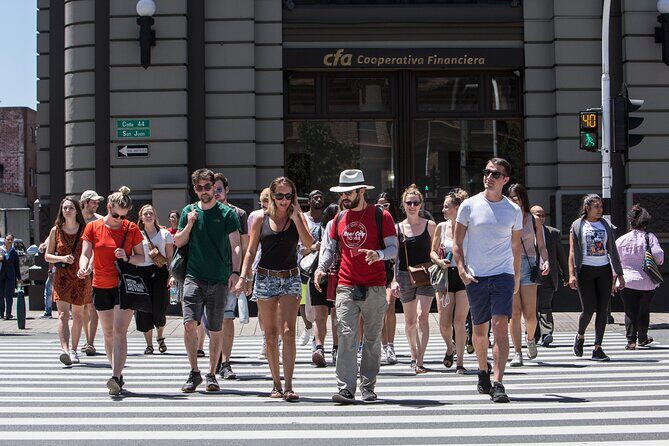
- Small group size (max 18) keeps questions and conversation flowing.
- Bilingual guides share context in a way you can actually follow.
- Medellín’s transformation is the theme, from plazas and monuments to urban design.
- Public art is everywhere: Botero sculptures, Pedro Nel Gómez frescoes, and more.
- Free admission at the listed stops means you pay mostly for the guide.
- Ends near Parque San Antonio Metro access, easy to continue your day.
A walk that turns Medellín into a timeline
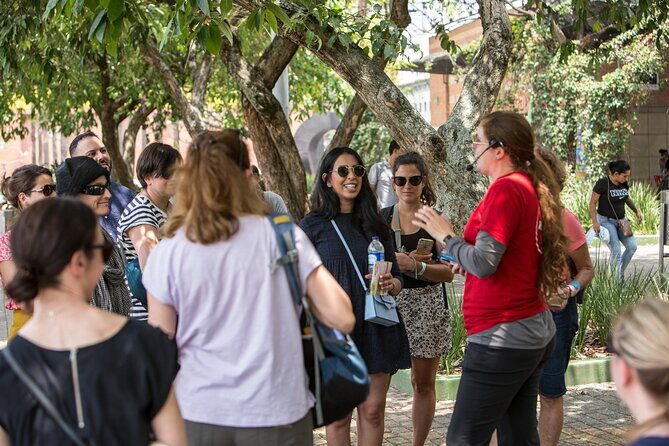
If you like cities where you can read the past in the streets, this tour is built for you. Medellín’s center can feel like it’s speeding ahead, but the guide keeps snapping the view back into focus: why these places mattered, what changed, and how people shaped that change.
I also appreciate that it doesn’t treat Medellín like a museum piece. The city is still living, still rebuilding, and still arguing with itself. That matters, because you’ll hear the story in terms of daily life, not only official facts.
And yes, you’ll cover a lot in about three hours—so it’s ideal when you want a solid grounding without sacrificing your whole day.
Other city tours we've reviewed in Medellin

Starting at the Old Train Station: where Medellín modernized
Your tour begins at the Edificio del Ferrocarril de Antiooquia, the Old Medellín Train Station. This is the kind of starting point that helps everything else make sense. The guide frames it as the place where modern Medellín got its momentum—rail as a shortcut to growth, movement, and a new kind of city life.
Even with a short stop, this works. A train station isn’t just a building. It’s a statement: we’re connecting, we’re trading, we’re building something bigger than the old streets.
La Alpujarra and civic power: Medellín’s official heart
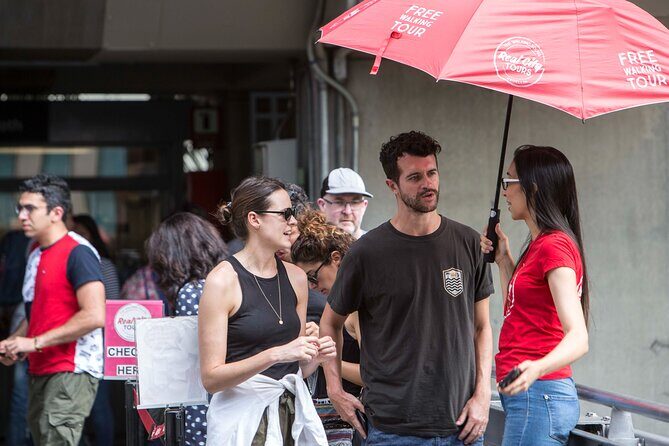
Next comes the Centro Administrativo La Alpujarra. Here the guide adds the broad historical frame, with context on Medellín and the paisa people—the regional identity that shows up in how people work, argue, vote, and build.
This stop tends to be where the walk shifts from places-and-photos into understanding. If you’re the type who likes to know the story behind the story, this is the point where the tour starts answering the big question: how did Medellín become Medellín?
Monumento a La Raza: concrete, bronze, and identity
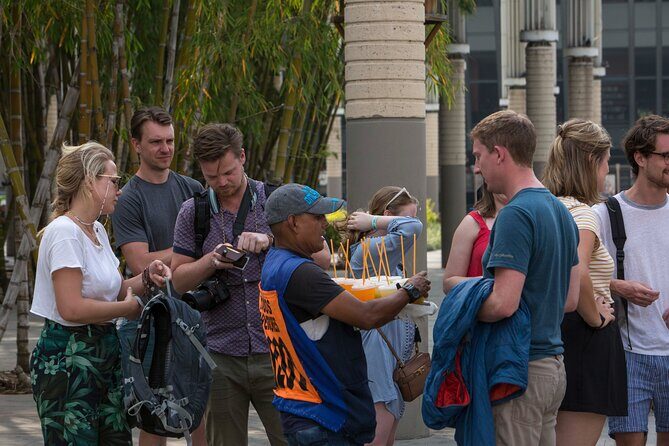
At the Monumento a La Raza, you’ll see the massive work by Rodrigo Arenas, dedicated to the paisa people of Medellín and Antioquia. It’s hard to miss—so the value here isn’t the size, it’s the explanation.
The guide helps you read it like language. What does this monument say about pride, belonging, and who gets recognized in public space? It’s also a good reminder that public art can be political even when it looks purely artistic.
Plaza de las Luces: 300 pillars and the idea of a safer city
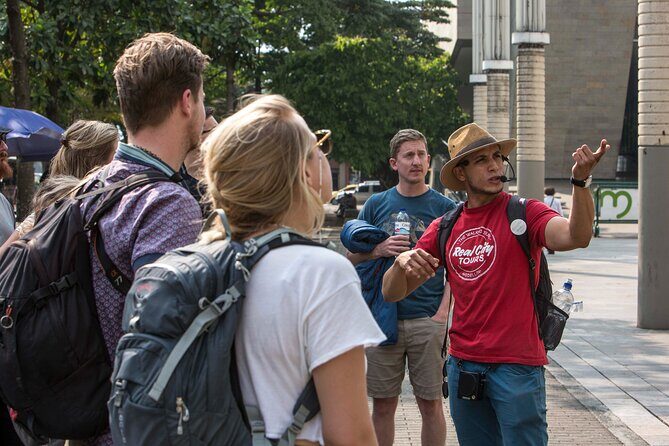
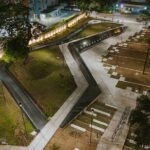
Then you reach Plaza de las Luces Medellín, famous for its dramatic 300 pillars that light up at night. The guide explains what those pillars represent and why the plaza matters in the transformation of Medellín.
I like this stop because it’s not abstract. You can stand there and picture the city changing after dark—not just brighter, but more intentional. Public lighting and design are one of those behind-the-scenes urban choices that can change how people feel about walking downtown.
Other walking tours we've reviewed in Medellin


Edificio Vásquez and Carré: architecture tied to social urbanism
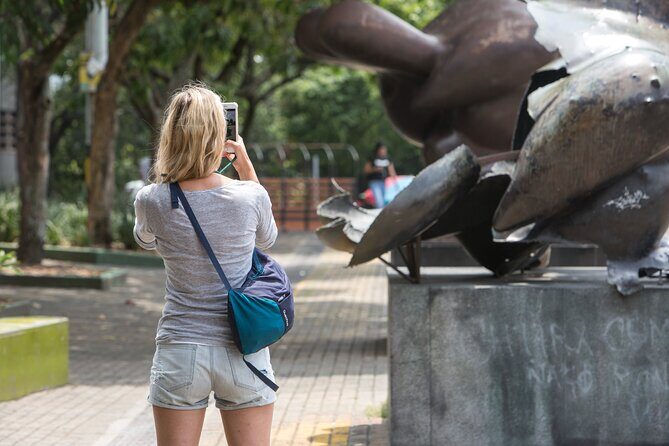
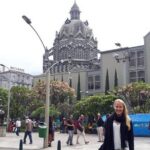
The walk continues to Edificio Vásquez and the Carré buildings, discussed together with the Square of Lights. The guide connects these buildings to the city’s social urbanism—the idea that urban design should help repair social life, not only create impressive views.
Even if you’re not an architecture person, you’ll likely get why this matters. These are places that reflect a philosophy: housing, streets, and public space can either exclude people or make room for them. Medellín has been trying hard to make room.
Paseo Carabobo: from noisy street to pedestrian green corridor
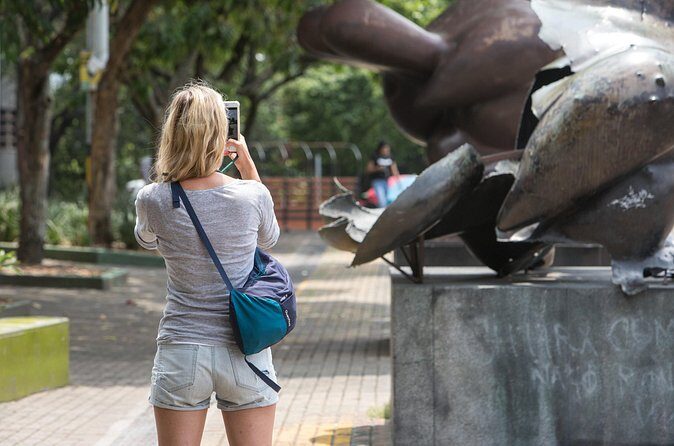
Next is Paseo Carabobo. This is where you’ll feel the city change in real time. The guide contrasts the street’s past—once polluted and noisy—with today’s version as a green tunnel and pedestrian boulevard.
And you’ll see the point quickly: downtown isn’t only about monuments. It’s also about movement, daily errands, street vendors, and people lingering because the space invites it.
If you like tours that include at least one moment of sensory contrast—before-and-after this is a great stop.
Palacio Nacional: courts and jail now turned into art and coffee breaks
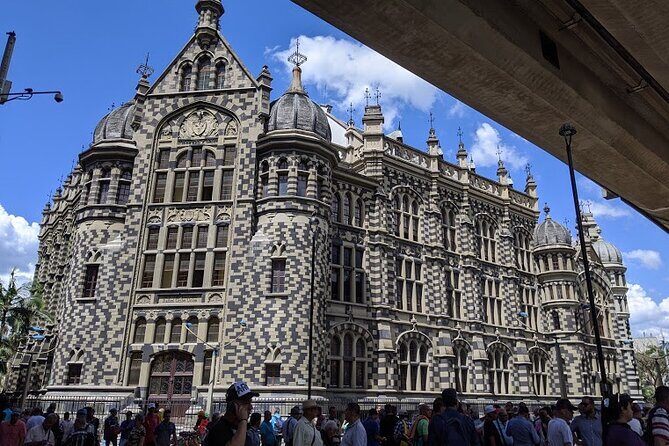
At Centro Comercial Palacio Nacional, you get a big one. The building dates back to the 1920s, and the guide explains why it’s an architectural standout. It also used to house the courts and even a jail. Today, it’s a shopping center with art galleries upstairs.
This stop hits the sweet spot between storytelling and practicality. You can take a breather, use the bathroom, and grab coffee—something the tour explicitly plans for. It’s the moment where you stop walking long enough to reset your energy for the final art-heavy stretch.
Galería de Arte Palacio Nacional: local art, not tourist-only
Right after, you visit the Galería de Arte Palacio Nacional, where you’ll get a chance to see what the guide frames as the largest collection of local art in the city.
This is a strong follow-up to the earlier architecture. You’re not just seeing fancy spaces—you’re seeing what the city produces and values. If you only have one afternoon to orient yourself, this is one of the stops that helps you understand Medellín beyond its reputation.
Iglesia de la Veracruz: religion, modern contradictions, and perspective
At Iglesia de la Veracruz, the guide takes a more thoughtful turn. You’ll discuss the contradictions of modern Colombian society by talking about the reality in front of what many argue is the city’s second oldest church.
This is the stop for people who don’t want history sanitised. The guide frames it as a conversation, not a lecture: how ideas about the past show up beside the reality of today.
Plaza Botero: 23 sculptures and Fernando Botero’s role in renewal
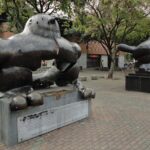
Then you land at Plaza Botero, where the tour gets very visual. The guide explains the role of Fernando Botero in Medellín’s renewal and walks you through the 23 sculptures he donated to the city.
What makes this worthwhile is the way the guide explains the art’s humor and meaning without treating it like a trivia game. Botero’s style—big shapes, bold forms—works as a city symbol. It’s art you can spot from blocks away, and it’s art you can discuss like you’re having a normal street conversation.
The main art museum and the Belgian architect connection
You’ll also be shown Medellín’s main art museum, with an explanation for why the building looks halfway built and its connection with a Belgian architect.
Even without deep technical details, this is a great kind of stop. It makes you notice design choices you’d otherwise ignore. In a city built on reinvention, even a partially finished-looking museum becomes part of the narrative.
Parque Berrío: Pedro Nel Gómez frescoes and the Metro’s meaning
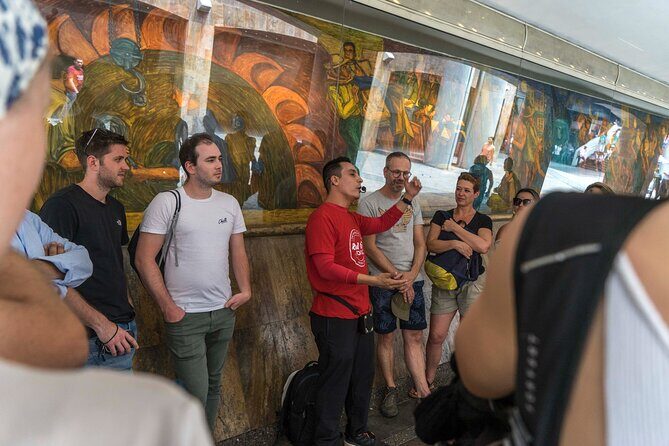
Next comes Estación de Policía Parque Berrío, set between the police station and the Parque Berrío Metro station. The guide points out the frescoes by Pedro Nel Gómez and explains why the Metro system matters to the paisa people.
I like this because it connects infrastructure to identity. The Metro isn’t only transport. In Medellín, it’s a social system—how people move safely and reliably through the city.
And the frescoes give you something human to look at while you’re in that Metro zone. It’s art tucked into a place you might otherwise treat as purely functional.
Parque Berrío: the oldest square and the spirit of folk music
At Parque Berrío, you’re told this is the city’s oldest square. Even if it’s no longer colonial in style, the guide helps you feel how the old-school spirit survives—showing up in the shape of folk music.
This is a good stop if you’re starting to sense a pattern: Medellín doesn’t just change its buildings. It changes how people gather, how they celebrate, and what they hear while they wait for the next bus, train, or friend.
Parque San Antonio: Birds of Peace and resilience after 1995
The tour closes at Parque San Antonio, where you’ll see the Birds of Peace by Fernando Botero. The guide explains how these sculptures became symbols of resilience and resurrection after the bombing of 1995.
This ending hits harder than you might expect. The guide ties the sculpture’s calm image to the city’s story of recovery, which makes the art feel less decorative and more like a communal message.
Price and what you get for $16
For $16 per person, this is strong value because you’re paying for a guided story through multiple major downtown locations, not just a walk. The stops listed have free admission entries, which means you’re not stacking up extra ticket costs mid-route.
You also get practical extras:
- a bilingual guide
- a group picture
- restaurant recommendations and activities recommendations
Lunch is not included, but you do get a scheduled break at Palacio Nacional for coffee and a restroom stop. That’s a nice trade-off: you can keep moving, without hunting for basic needs on your own.
Timing-wise, the tour runs about three hours, and it’s usually booked around 10 days in advance. If your schedule is tight, booking earlier is smart.
Pace, group size, and how to make the most of it
With a maximum of 18 travelers, you won’t get lost in a crowd. That matters on a story-driven walk, because you’re more likely to catch details and ask questions without feeling rushed.
This tour also says most travelers can participate. So if you’re comfortable walking in a city center for around three hours, you’re likely fine.
My advice: come with one or two topics you care about—urban design, art, or modern history—and use them to guide your listening. A good guide will give you answers that connect across stops.
Who this tour fits best
This is a great match if you:
- want a focused first look at downtown Medellín
- care about why places look the way they do
- like public art and want it explained in plain language
- enjoy guides who bring personality, not just dates
It’s also a good choice for first-timers who want context without drowning in academic detail. The humor and storytelling—seen in how guides like Germán and Julie are described—helps the darker moments land with clarity, not confusion.
Should you book this Medellín Historic Walking Tour?
Yes, if you want a compact, affordable way to understand how Medellín reinvented itself, this tour is worth your time. For $16, you get a bilingual guide, a walk through major symbols of transformation, and lots of public art with real explanations—not just photo spots.
I’d consider it carefully only if you strongly need very clear pronunciation in English throughout, since accents can be a minor challenge for some people. If that’s you, plan to ask follow-up questions and keep a flexible mindset.
If you’re the type who likes to feel oriented fast—then this is exactly the kind of walk that helps you move through Medellín with confidence.