REVIEW · MEDELLIN
Medellín Essential: history & local life on E-bike
Book on Viator →Operated by Turibike · Bookable on Viator
Medellín on two wheels beats traffic. This 3½-hour e-bike tour gives you a fast, local-feeling route through the city’s past, present, and plans for the future, with free stops built into the ride.
I like two things a lot. First, the experience keeps you in a small group (max 8), so your guide can actually answer questions and adjust the pace. Second, it leans hard on bike-lane riding, which makes the whole downtown area feel more manageable. Guides such as Dayana or Toto are the kind who keep things moving and make the stories click.
One possible drawback: you’ll need intermediate bike comfort and attention, since parts of the route run through busy streets and pedestrians. If you hate riding near traffic, you might find the pace stressful rather than fun.
In This Review
- Key things to know before you pedal
- Medellín on an e-bike: what this tour does better than a car ride
- Price and value: why $50 feels fair here
- Meet-up at Turibike in El Poblado: how to start smoothly
- What you get included (and what you should bring)
- The route: stop-by-stop from parks to plazas
- Parque Ciudad del Río: green space + a museum idea
- Perpetuo Socorro: the creative district in action
- Parque San Antonio: sculptures + memory of a bombing
- Junín street and a fruit juice stop at a long-running shop
- Plaza Botero: the big outdoor sculpture lineup
- Parque de las Luces: light towers and early modern planning
- Plaza Mayor: the main event center and architectural mix
- Parques del Río: public space that feels built for everyday people
- Guides make the difference: names to ask for
- Safety and riding comfort: why the route feels easier than you expect
- Pacing and photo expectations
- Who should book this tour (and who might not love it)
- Should you book Medellín Essential: history & local life on E-bike?
- FAQ
- How much does the Medellín Essential e-bike tour cost, and how long is it?
- Where do I meet for the tour?
- What’s included, and do I need to bring anything?
- Do I need bike experience?
- What are the age, height, and weight limits?
- What if the weather is bad or I need to cancel?
Key things to know before you pedal
- Small group, max 8: more personal help when you’re learning the bike and route.
- Bike-lane heavy route: fewer stressful moments, more time watching the city.
- Free highlights built into the loop: parks, plazas, and outdoor art without extra tickets.
- Snacks plus water support: fruit snacks/juice most days, and bottled water included (bring your own flask).
- Rain-ready: helmet, rain poncho, and insurance are part of the package.
Medellín on an e-bike: what this tour does better than a car ride
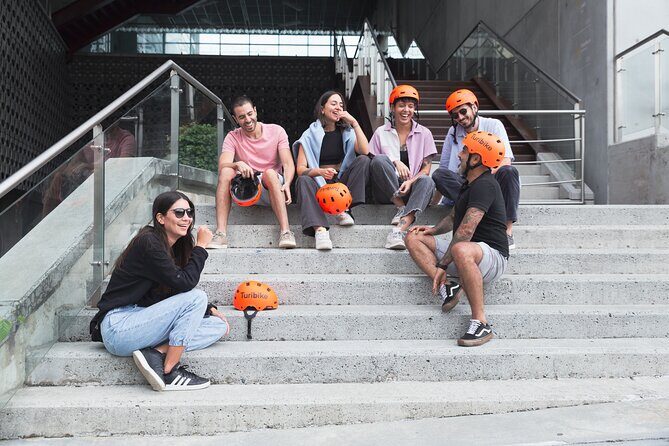
If you want Medellín to feel real fast, this is a smart way to start. You get a guided route through the neighborhoods and downtown zones where the city is changing, not just the postcard version. The e-bikes mean you can cover ground without turning it into a sweaty cardio challenge.
The tour also has a practical purpose: it helps you get your bearings. After a ride like this, it’s easier to plan your next day because you’ll recognize streets, plazas, and the general flow of the city. That matters in a city where your day can either feel smooth or chaotic depending on how you navigate.
Other electric and city bike tours in Medellin

Price and value: why $50 feels fair here
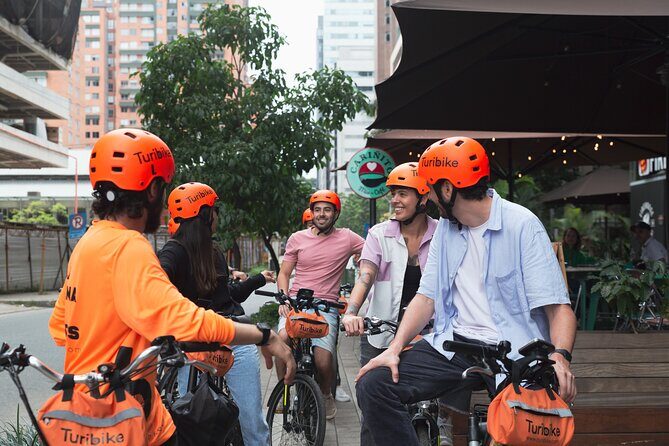
At $50 per person for about 3 hours 30 minutes, you’re paying for more than transportation. You’re paying for a guided loop that links multiple free public spots, plus snacks and safety gear. You also avoid the headache of figuring out which areas to combine and how to move between them without losing time.
This tour works well on a budget because so much of what you see is included at no extra cost: the parks, plazas, and outdoor sculpture stops are free. And since the group is capped at 8, you’re not paying for a big, slow crowd that spends half the time waiting.
Meet-up at Turibike in El Poblado: how to start smoothly
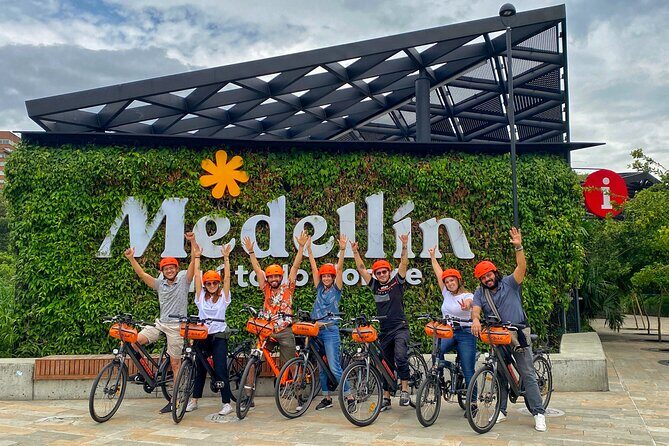
You meet at Turibike E-bike tours on Cl. 17 in El Poblado, and the tour ends back at the same place. There’s no hotel pickup, so you’ll want to plan on getting there on your own. The upside is you’re not waiting for a van schedule, and you can time your arrival to fit your day.
Tip: arrive a few minutes early. The meeting point is described as a kind of coworking hub, and on at least one departure people added a quick breakfast stop there before rolling out. Even if you skip food, arriving early gives you time to get your helmet sorted and get comfortable on the bike.
What you get included (and what you should bring)
Included:
- Electric bike and helmet
- Insurance
- Bottled water (you still need to bring your own flask)
- Rain poncho
- Snacks like fresh fruit, juice, or local bites depending on the day and the group’s mood
What to bring:
- Your own flask for the water
- Comfortable clothes you can ride in
- A little patience with traffic sounds and city energy
This mix of gear matters. Helmets and ponchos help on days when weather changes fast. And having water already supported means you can focus on the ride, not the next place to buy something.
The route: stop-by-stop from parks to plazas
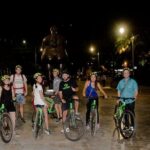
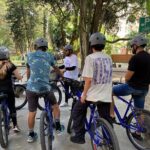
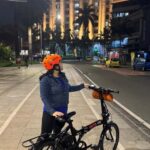
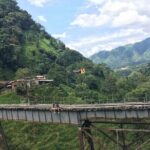
The tour is designed like a loop, moving from green public space into art, architecture, and downtown urban life. Most stops are quick, because the goal is to keep you rolling and to fit in several neighborhoods without exhausting you. If you love taking slow photos, build in a bit of extra time at the most interesting corners during each stop.
Other cycling tours in Medellin

Parque Ciudad del Río: green space + a museum idea
You start at Parque Ciudad del Río, a green pocket sitting amid growing buildings. It also includes a museum experience where the architecture helps tell a story about the past and the future. Even if you only spend a short time there, the contrast is the point: nature inside a changing city.
Why it’s worth your attention: it sets the theme of the whole tour. Medellín isn’t only rebuilding infrastructure; it’s shaping public identity around design and access.
A small drawback: with a short stop, you’ll likely appreciate the setting more than you’ll read every detail. If you want museum deep-reading time, you might add that later on your own.
Perpetuo Socorro: the creative district in action
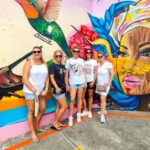
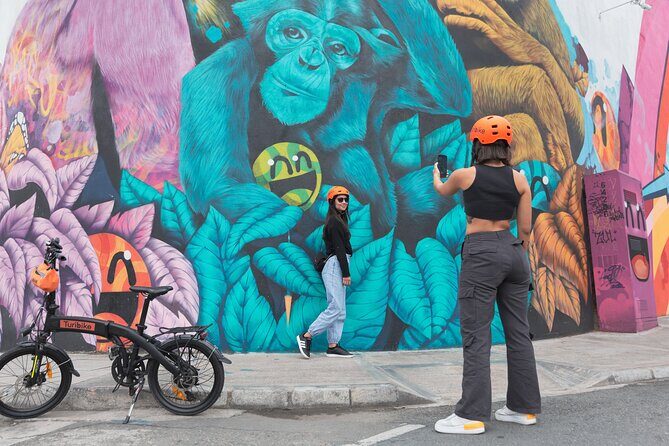
Next is Perpetuo Socorro, where you can see transformation happening right now. This stop is known for sustainable buildings, big murals, and lots of greenery. It feels like a place where art isn’t decoration; it’s part of how the neighborhood explains itself.
What you’ll notice: the visuals are immediate, especially the mural work. You’ll get a stronger sense of Medellín as a city that builds culture into everyday streets.
Practical note: murals are photo magnets. Still, stay ready to move when your guide signals, because the tour is meant to keep a steady rhythm.
Parque San Antonio: sculptures + memory of a bombing
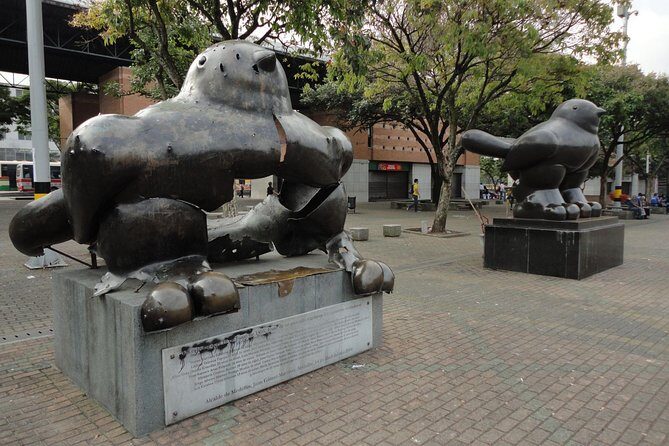
At Parque San Antonio, two sculptures by one of Colombia’s most important artists frame a painful chapter: the story of one of the city’s worst bombings in the last century. It’s one of the tour stops that lands emotionally, even if the time there is brief.
Why this stop matters: it’s a reminder that Medellín’s modern identity is tied to memory and survival, not just new buildings. You’ll walk away with more context than you’d get from only upbeat street art.
Consideration: this is heavier subject matter. If you’re hoping for a purely cheerful ride, you may want to mentally pace yourself.
Junín street and a fruit juice stop at a long-running shop
Then you roll into the downtown feel, where the tour points out the city’s tallest building area on Junín, Medellín’s famous commercial street. The planned break is a juice made from freshly cut fruit at a shop that has been serving for over 20 years.
This is a small stop, but it’s a good one. Food and drink pauses are where you naturally slow down and absorb what you’ve just seen. Plus, stopping for something local helps the tour feel like city life, not a checklist.
If you’re picky: ask what’s available that day. Since the tour’s snacks can vary, flexibility helps you get the best version of the experience.
Plaza Botero: the big outdoor sculpture lineup
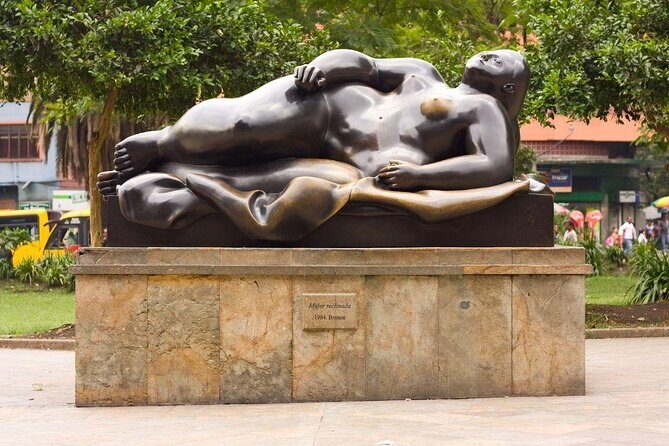
Plaza Botero is a must for first-timers. You’ll see the world’s biggest display of Botero sculptures, with 23 pieces between Museo de Antioquia and the Palace of Culture.
What to do here: take 2–3 minutes to look at proportions and expressions. Botero’s style is easy to spot, but the outdoor setting changes how you read the work. It also helps you understand why Botero is such a key visual language in Medellín.
Time reality: the stop is short, so you may want to pick a few sculptures to focus on instead of trying to see everything at once.
Parque de las Luces: light towers and early modern planning
Next is Parque de las Luces. This is well known in night photos for its 300 towers of light, and it also connects to an early stage of Medellín’s modern urban planning transformation. Even in daylight, the space tells a story about how the city thinks about public life.
Why it’s worth your attention: it shows that urban transformation isn’t only about cars and buildings. It’s also about safety, identity, and how nighttime space feels.
One practical drawback: if you’re there earlier in the day, you won’t see the full lighting effect. Still, you’ll get the design idea, and the guide can explain why it matters.
Plaza Mayor: the main event center and architectural mix
At Plaza Mayor, the tour hits the big “city machine” side of Medellín. This is the main event center, where different construction materials and architectural styles share the spotlight.
Why this stop helps you: you’ll start to connect the dots between Medellín as a culture-and-community city and Medellín as a business-and-event hub. It’s a useful contrast after the art and memorial stops.
Consideration: this is more architectural than emotional. If you’re craving only street-level stories, treat this stop as a short reset.
Parques del Río: public space that feels built for everyday people
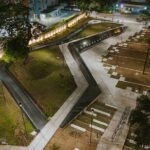
Finally, you ride to Parques del Río, one of the newest and prettiest public-space projects. Here, you get the “Medellín future” feeling: families around, pets out, people working out, and kites in the air.
This last stop is the reward. You see what public space looks like when it’s designed for regular daily use, not just for events. It’s the kind of place you’ll want to remember when you plan your own day after the tour.
If you’re lucky with timing, you’ll catch locals using the area in real time, which makes the whole route feel less theoretical.
Guides make the difference: names to ask for
The tour’s quality often comes down to the guide’s style, and several names show up with standout feedback. People have mentioned leaders such as Dayana, Toto, Camilo, Diana, Juan, Daniel, Andrais, and John Fredy.
What matters is the pattern in their guiding: they focus on Medellín’s transformation, move at a pace that works for the group, and keep you safe on busier stretches. Many also take photos and videos during the ride, which can help if you want your own memories without wrestling your camera constantly.
If you’re booking and you can request a guide, asking about one of these names is a reasonable move.
Safety and riding comfort: why the route feels easier than you expect
A big selling point is how much of the ride stays on bike lanes. That doesn’t mean the city is quiet. It means you’re more often in the lane designed for cyclists, not playing guess-the-intent with every vehicle.
The e-bike itself helps a lot. People have described the motors as making hills and bridges feel manageable. That’s huge in Medellín, where elevation and slopes can quietly turn a walking day into a tired day.
Still, this is not a “push-button easy” tour. You’ll need intermediate comfort riding in a busy environment, watching for pedestrians and paying attention to the road while moving. One simple rule: if you’re uncomfortable riding around other people, you’ll feel it here.
Pacing and photo expectations
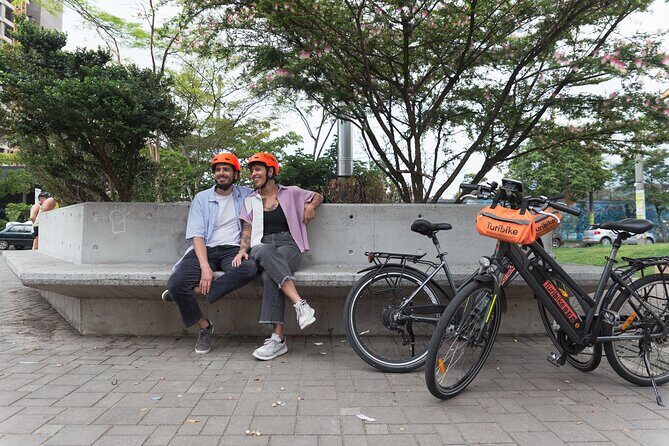
Stops are intentionally short, so you can see a lot without losing the tour’s momentum. That’s great for first-day orientation, but it can feel fast if you want long picture sessions.
Also, photography from an e-bike can be tricky. Riding requires attention, and you’ll likely put more effort into capturing the moment with your eyes rather than trying to film and shoot constantly. If you like video, bring a way to stabilize your camera if you have one.
Who should book this tour (and who might not love it)
Best for:
- First-time visitors who want a city overview with context
- People who want to move fast but still prefer a guided route over public transit
- Travelers who enjoy architecture, public art, and how design shapes daily life
- Couples and small groups who like a guided plan without big crowds
Maybe skip (or consider a different style) if:
- You dislike biking in lively street conditions
- You need long photo stops to feel satisfied
- You’re looking for a slow, museum-like pace rather than a ride-and-see loop
The tour is also geared for riders 12+ with suggested height around 1.50 m, and a maximum weight limit of 110 kg. If you fall outside those guidelines, you’ll want to check with the operator.
Should you book Medellín Essential: history & local life on E-bike?
I think it’s an excellent “first or second day” choice if you want orientation plus real-city context. The combination of parks, murals, memorial art, Botero sculptures, and the light-tower public space gives you a story arc: Medellín remembers, builds, and plans.
It’s also strong value for $50 because the route links multiple free highlights and includes the basics you’d otherwise have to manage yourself: helmet, insurance, water support, and snacks. Add the small group size and bike-lane focus, and you get an experience that feels efficient without feeling rushed.
If you’re comfortable riding and you want to learn Medellín’s new-and-old identity in one go, book it. If you’re anxious around traffic or want lots of unhurried time at each stop, consider adjusting your expectations or choosing a slower option.
FAQ
How much does the Medellín Essential e-bike tour cost, and how long is it?
It costs $50.00 per person and runs about 3 hours 30 minutes.
Where do I meet for the tour?
You meet at Turibike E-bike tours Medellín, located on Cl. 17 in El Poblado, Medellín. The tour ends back at the meeting point.
What’s included, and do I need to bring anything?
The price includes the electric bike, helmet, insurance, bottled water (you must bring your own flask), and snacks (fruit/juice or local snacks depending on the day). Rain ponchos are also included.
Do I need bike experience?
You need intermediate bike skill level. The tour is designed for most travelers, and the electric bike helps with hills, but you should feel comfortable riding in a city environment.
What are the age, height, and weight limits?
The minimum age is 12. A suggested minimum height is 1.50 m (4′ 9″). The maximum weight is 110 kg (242 lbs).
What if the weather is bad or I need to cancel?
The tour requires good weather. If it’s canceled due to poor weather, you’ll be offered a different date or a full refund. You can cancel for a full refund up to 24 hours before the experience starts.