REVIEW · MEDELLIN
The dark days: Pablo Escobar and the new Medellin private tour
Book on Viator →Operated by Medellin City Services · Bookable on Viator
Pablo Escobar still casts a long shadow. This private Medellín tour links real-world locations to the rise, fall, and aftermath of Escobar, with stops at memorials, his family’s resting place, the house where he was captured, and the neighborhood he founded. It’s historical, but it’s also very Medellín: the city’s pain, power, and rebuilding all show up in what you can still see.
I love the convenience of round-trip hotel pickup and drop-off, and the fact you move in a private vehicle without wasting half your day figuring out routes. I also like how this tour tends to answer the bigger questions people have about Escobar—who was involved, what changed afterward, and what Medellín learned. Guides like Daniel, Ivan, and Luis Reyes (noted for clear English) are repeatedly highlighted for making the story feel human, not like a lecture.
One possible drawback: it’s not a long day. At roughly four hours, you’ll spend short windows at multiple sites, so if you want slow, detailed museum-style time, you may feel a bit rushed—especially on busy days when traffic can compress schedules.
In This Review
- Key highlights that matter in real life
- The Pablo Escobar route in 4 hours: what you’ll actually see
- Price and logistics: why $61.75 can feel fair or frustrating
- Door-to-door comfort: private vehicle + hotel pickup that saves your day
- Stop 1: Monaco building ruins, now an inflection park for victims
- Stop 2: Cementerio Jardines Montesacro and the unsettling placement of his grave
- Stop 3: Placita de Florez and Los Olivos—where the capture story gets tense
- Stop 4: Barrio Pablo Escobar—when the myth meets daily life
- Guides make or break it: the storytelling styles you can expect
- The “crime history” question: how to keep this tour from feeling like glorification
- What’s not included: food, drinks, and the best way to avoid a grumpy stomach
- Should you book this tour? Decide fast with the right checklist
- FAQ
- How long is the Pablo Escobar private tour?
- What does the tour cost per person?
- Is hotel pickup and drop-off included?
- Do I travel in a private vehicle?
- What stops are included?
- Are admission tickets included?
- Is food or lunch included?
- What language will the guide use?
- Is it only my group, or will I join others?
- Can I cancel for free?
- Are service animals allowed?
- What should I wear?
Key highlights that matter in real life
- Private door-to-door transfers from your hotel so you can start and finish without stress.
- Four focused stops connected to Escobar’s life, his capture, his burial, and the community he founded.
- Free admissions at key memorial and cemetery stops, plus an included ticket for the community visit.
- A true private group (only your group goes), which makes it easier to ask questions and shape the pace.
- Different guide styles show up across names like Daniel, Ivan, Joe, and David, with many praised for friendly, question-ready explanations.
The Pablo Escobar route in 4 hours: what you’ll actually see
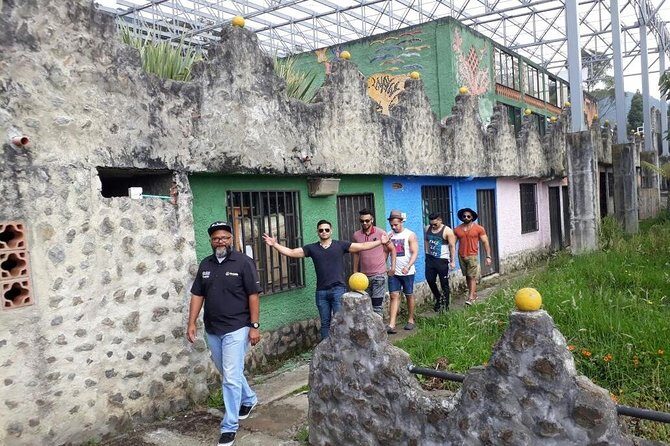
This tour is built for people who want more than a recap of the Netflix-style version of Escobar. You’re not just touring “Pablo stuff.” You’re moving through places where the city remembers—through ruins repurposed as memorials, a cemetery that places him among Medellín’s upper circles, and a neighborhood that still reflects what his power created.
Expect a mix of scenes:
- Memorial spaces where the message is about victims and the conflict’s real human cost.
- Personal, physical locations tied to Escobar’s life and death—up close, not just from afar.
- A neighborhood visit where the story shifts from legend to everyday community.
And because it’s private, your guide can slow down when you’re curious or speed up when you’re not. That matters here, because people tend to have very pointed questions—about responsibility, timing, motives, and how Medellín moved forward.
Other Pablo Escobar history tours we've reviewed in Medellin


Price and logistics: why $61.75 can feel fair or frustrating
At $61.75 per person for about 4 hours, you’re paying for more than sightseeing. You’re paying for:
- Hotel pickup and drop-off
- A private vehicle
- A guide plus handling and all taxes/fees
- Fuel surcharge and the operational costs that come with running a legit tour service
Is it cheap? No. But it also isn’t just paying for a driver to circle a map. The value depends on what you want.
Where the price feels right: if you want a guided explanation at each stop, and you prefer comfort plus direct logistics. One common thread in the positive feedback is that guides don’t just name-drop; they explain why each location matters, and they answer follow-ups.
Where it can feel off: if you expect a long, slow tour with lots of time in each place, the “four stops in four hours” pacing can feel tight. There’s also an important practical factor in Medellín: traffic. A negative experience described a schedule getting squeezed, and that’s something to consider if you’re visiting during peak days.
My advice: treat this as a sharp, guided primer. If you fall in love with the topic and want more, you’ll likely want to add extra time afterward for deeper stops.
Door-to-door comfort: private vehicle + hotel pickup that saves your day
The simplest win here is the logistics. You get hotel pickup and drop-off, and you ride in a private vehicle with your guide/driver handling the route. For many first-timers in Medellín, that’s the difference between enjoying the day and spending it stressed.
Also, the walking is manageable, but it’s real. You’ll want comfortable walking shoes because you’re visiting a memorial site and a cemetery. Nothing extreme is described, but you don’t want to do this in sandals and hope for the best.
Finally, flexible timing is possible if you ask. Some tours in the city run to a strict clock; this one may be more adjustable, depending on availability. That helps if you’re trying to match your schedule with afternoon plans (or if your hotel is far from downtown).
Stop 1: Monaco building ruins, now an inflection park for victims
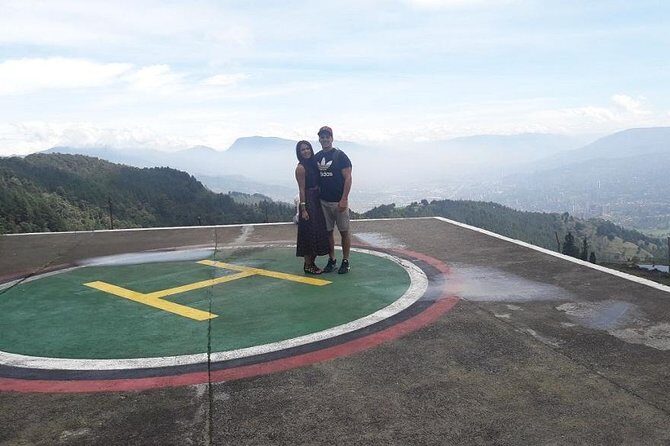
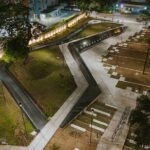
Your first stop is at Cra. 43B #16-95, tied to the Monaco building ruins—once described as one of Pablo’s bombed penthouses. What makes this stop different is what’s there today: the ruins are treated as an inflection park dedicated to the victims and real heroes of the conflict.
This is the part of the tour where the tone shifts away from “crime curiosity” toward something heavier. Ruins work like that. They’re not staged; they’re evidence. And when a site has been repurposed into remembrance, you get a built-in context for how Medellín holds the past.
How to approach it: keep your expectations balanced. You’re not there to enjoy the views. You’re there to understand the scale—what happened, how it affected people, and why the city chose remembrance over erasure.
Time on site: about 20 minutes, and admission is free.
Possible drawback: if you’re hoping for big photo ops, this stop can feel more reflective than scenic. But if you care about meaning over aesthetics, you’ll likely appreciate it.
Stop 2: Cementerio Jardines Montesacro and the unsettling placement of his grave
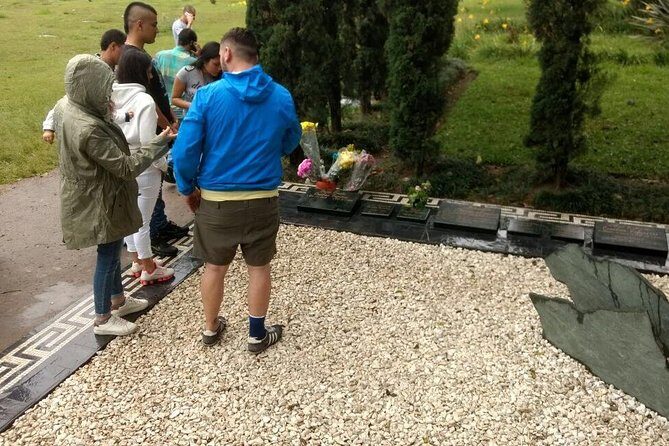
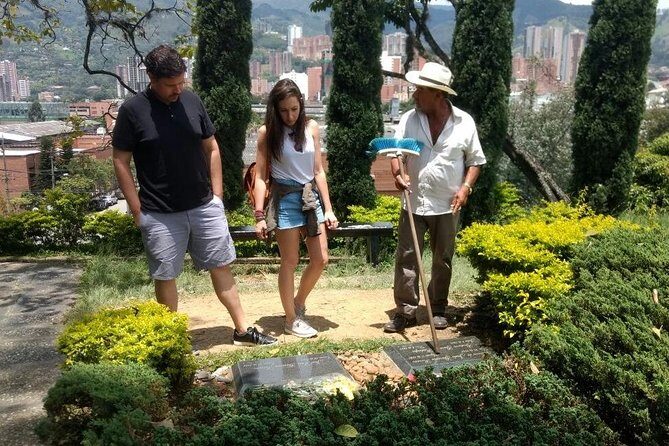
Next comes Cementerio Jardines Montesacro, where you visit Pablo’s grave and his family. The details matter: you’ll find him resting in the middle of politicians and the elite of Medellín, which adds a layer many people don’t expect.
This stop hits hard because it’s not an underground, remote “out of sight” narrative. It’s a cemetery—a structured place where names, status, and memory all sit side by side. Your guide’s job here is crucial, because the emotional reaction is instant, but the explanation helps it make sense in context.
Time on site: about 30 minutes and admission is free.
How to get the most out of it: ask your guide to explain the contrast between power and legitimacy, and how the city’s social layers intersected with the cartel era. Guides who emphasize non-biased storytelling tend to land best here—this is exactly the sort of stop where you’ll want clarity, not myth.
Consideration: if you get emotionally affected by sites of death, pace yourself. Don’t rush this segment just to keep the clock. The best tours give you a moment to feel the place and then understand it.
Other private tours in Medellin





Stop 3: Placita de Florez and Los Olivos—where the capture story gets tense
Now the tour turns toward the capture and the endgame. You stop at Placita de Florez, in the Los Olivos community, visiting the house where Pablo got caught. You also see the rooftop where he reportedly finished his violent career—along with the lingering question that comes with that moment: was it the DEA, Colombian police, the PEPES, or someone else who shot him?
That uncertainty is part of the story. A good guide doesn’t treat it like a trivia game. Instead, they’ll frame what’s known, what’s debated, and why narratives grew around the event as different groups claimed credit.
Time on site: about 10 minutes and admission is free.
What to watch for: because the time window is short, the explanation needs to be sharp. If your guide is strong, you’ll feel like you got the key story beats. If your guide is light, you’ll only see rooftops and walls and miss the point.
Stop 4: Barrio Pablo Escobar—when the myth meets daily life
The last stop is Barrio Pablo Escobar, the community he founded. This isn’t just about Escobar as a person—it’s about Escobar as infrastructure, influence, and legacy. The tour includes time here—about 45 minutes—and an admission ticket is included for this stop.
This is where your mindset matters. If you come expecting a theme park, you’ll miss the reality. Neighborhoods aren’t attractions; they’re places where people live with history in the background. A thoughtful guide will help you see how the cartel era shaped community identity, and how the area fits into Medellín today.
How to make this stop worthwhile:
- Ask what changed over time after his fall.
- Ask how residents and local culture talk about the past.
- Ask what the community wants you to understand versus what outsiders usually focus on.
A private format helps because you’re not stuck hearing a script in a group rush. You can ask the questions that keep nagging at you—then move on when you’ve got answers.
Guides make or break it: the storytelling styles you can expect
This tour lives or dies on the guide’s ability to explain without turning the story into either propaganda or sensationalism. In the feedback you provided, certain names come up often: Joe, Ivan, Daniel, David, Fabio, Flavio, Esteban, Luis Reyes, and Andrés among them.
Common praise points that you can use to guide your expectations:
- Guides tend to answer questions with a clear, non-biased approach.
- Many guides are described as friendly and able to explain both historical and present-day connections.
- Some guides are singled out for being funny while still being detail-oriented.
If you want a guide who can connect the past to the present city, Daniel and Ivan’s names appear with that theme. If you want a guide who’s described as humorous and question-ready, David’s name shows up that way too. (You can’t always request a specific guide, but you can ask what languages and guide styles are available for your date.)
Practical note: you’ll see temperature checks and periodic vehicle disinfection mentioned in the tour details. That’s not glamorous, but it signals the operator is paying attention to basic safety and hygiene.
The “crime history” question: how to keep this tour from feeling like glorification
This is the ethical tightrope of dark tourism. You’re touring sites tied to violence, and it can easily slip into the wrong mood.
What helps here is the way stops are framed:
- The Monaco building area is a remembrance space for victims and real heroes.
- The cemetery stop places his grave in a broader social context.
- The neighborhood visit is tied to what his community-building meant, and what came after.
To keep the experience grounded, I’d set one personal rule: don’t use the tour to debate who was the “coolest villain.” Use it to understand impact—on families, neighborhoods, and Medellín’s rebuilding.
If your guide keeps the focus on victims and consequences, that’s when the tour feels both honest and worthwhile.
What’s not included: food, drinks, and the best way to avoid a grumpy stomach
Food and drinks are not included, and lunch is also not included. That sounds like a small detail until you’re three stops deep, walking around memorials and cemeteries, and you realize you forgot to eat.
So plan to bring a simple strategy:
- Carry water if you can.
- Have a snack ready in your bag.
- If your start time is flexible, eat before you go rather than trying to find food mid-tour.
Several parts of the stop sequence are short, so there usually isn’t much time to go searching for a meal. This is one of those tours where being prepared makes the difference between calm curiosity and rushed irritation.
Should you book this tour? Decide fast with the right checklist
Book it if:
- You want a guided, private Escobar-focused overview in about four hours.
- You care about memorial context and how Medellín remembers—not just facts for trivia.
- You value hotel pickup and a private vehicle so you can spend your energy on the story, not navigation.
Consider skipping or upgrading your plan if:
- You want a slow, museum-like day with lots of time at fewer places.
- You’re extremely sensitive to sites tied to death and violence, because the cemetery stop is intense.
- You’re visiting during peak days and hate any chance of a schedule getting compressed. (Traffic happens; this tour is timed.)
My call: for most visitors, this is a good first Escobar tour—especially if you come with questions and want the guide to connect the dots. If you already know the basics and want deeper immersion, you might pair this with extra time in Medellín to extend the story in your own way.
FAQ
How long is the Pablo Escobar private tour?
The tour runs about 4 hours (approx.).
What does the tour cost per person?
The price is $61.75 per person.
Is hotel pickup and drop-off included?
Yes, hotel pickup and drop-off are included.
Do I travel in a private vehicle?
Yes. The experience uses transport by a private vehicle, and it’s a private tour for your group.
What stops are included?
You’ll visit the Monaco building ruins area at Cra. 43B #16-95, Cementerio Jardines Montesacro (Pablo’s grave and family), Placita de Florez in the Los Olivos community, and Barrio Pablo Escobar.
Are admission tickets included?
Admission is free for the first three stops listed, and an admission ticket is included for the Barrio Pablo Escobar stop.
Is food or lunch included?
No. Food and drinks, including lunch, are not included.
What language will the guide use?
The guide may be multi-lingual. Some guides are noted for speaking English well.
Is it only my group, or will I join others?
It’s a private tour/activity. Only your group will participate.
Can I cancel for free?
Yes. You can cancel up to 24 hours in advance for a full refund.
Are service animals allowed?
Yes, service animals are allowed.
What should I wear?
Comfortable walking shoes are recommended.