REVIEW · MEDELLIN
Pablo Escobar tour and comuna 13
Book on Viator →Operated by Discovering Medellin · Bookable on Viator
Escobar’s story lives in the streets of Medellín. This private tour connects the big-name history—Pablo Escobar’s life, death, and legacy—with what Medellín built afterward in Comuna 13. You’ll move from a cemetery context lesson to a neighborhood where murals and community pride tell a different side of the same past.
Two things I really like here: the thoughtful, non-glamorizing framing that centers victims and consequences, and the fact that you get hotel pickup and drop-off plus an air-conditioned private vehicle. One drawback to plan for is that the topics are heavy; you’re ending with a memorial, so this isn’t a light, jokes-all-day outing.
In This Review
- Key highlights to focus on before you go
- Why this Pablo Escobar and Comuna 13 pairing works
- Private ride + hotel pickup: the practical upgrade
- Stop 1: Cementerio Jardines Montesacro and the many perspectives on Pablo
- Stop 2: Los Olivos neighborhood and what the “death-site” can teach
- Stop 3: Comuna 13—street art, memory, and real community interaction
- What to watch for while you’re there
- Why the guides seem to matter a lot here
- Stop 4: Parque Memorial Inflexion—honoring victims and resisting myth
- How long is the day, and what pacing feels right?
- What’s included (and what you’ll want to plan for)
- Price and value: where the $92.86 fits in
- Who should book this tour—and who might skip it
- Should you book this Pablo Escobar + Comuna 13 tour?
- FAQ
- How long is the Pablo Escobar and Comuna 13 tour?
- Is this a private tour?
- What stops are included?
- Is lunch included?
- Are tickets required for the stops?
- What’s included in the price?
- What if the weather is bad?
Key highlights to focus on before you go
- Private, just-your-group pacing with guides who answer questions without rushing you
- Hotel pickup and drop-off plus a/c comfort, so you skip public-transport stress
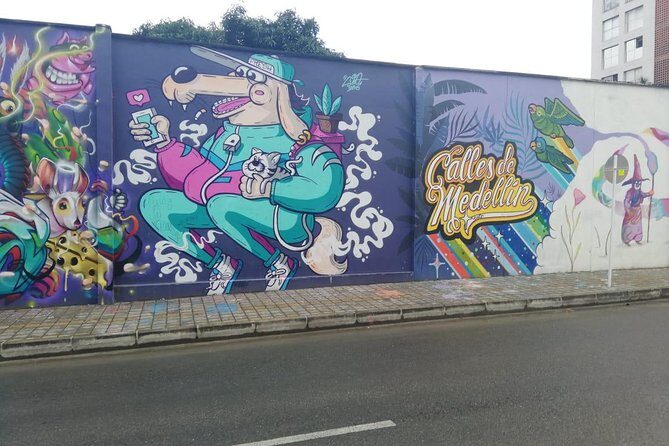
- Comuna 13 as the “contrast” stop, where social investment and resilience show up in real walls and real people
- Cemetery + death-site context that explains how policies and violence shaped Medellín
- Parque Memorial Inflexion brings it back to human cost instead of myth-making
Why this Pablo Escobar and Comuna 13 pairing works
If you’ve watched the Escobar series, you might think the story ends with capture, death, and headlines. Medellín doesn’t work that way. This tour’s structure is useful because it shows two truths at the same time: the damage was real, and the city’s recovery is visible in day-to-day life—especially in Comuna 13.
I also like how the tour keeps the narrative grounded in context. You’re not just hearing facts about one man. You’re getting a lens on what shaped that era—uncertainty, violence, and how public choices and illicit economies can collide.
Other Comuna 13 graffiti tours we've reviewed in Medellin


Private ride + hotel pickup: the practical upgrade
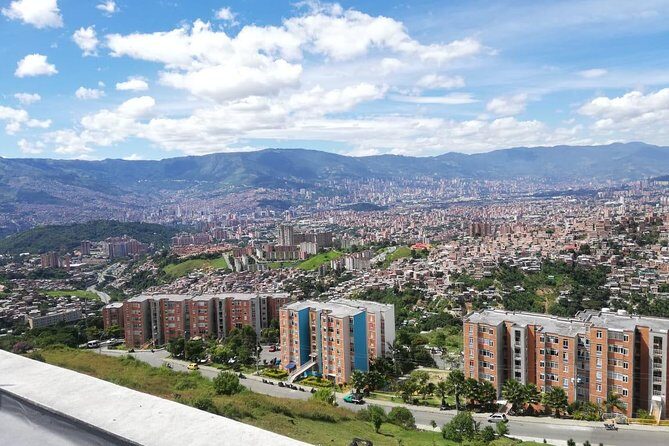
Medellín has hills and busy streets, and Comuna 13 areas can be tricky to manage on your own. The tour handles the hard part with a private vehicle plus hotel pickup and drop-off, so you spend your energy on the stops rather than figuring out routes.
This matters more than it sounds. A day like this benefits from calm transitions. You’ll be in transit enough times that having air-conditioned comfort keeps you from arriving frazzled—and the guide can keep the story flowing between locations.
The tour is private, so it’s only your group. That usually makes it easier to ask follow-ups, adjust timing, or pause if you want extra time at murals or memorial areas.
Stop 1: Cementerio Jardines Montesacro and the many perspectives on Pablo
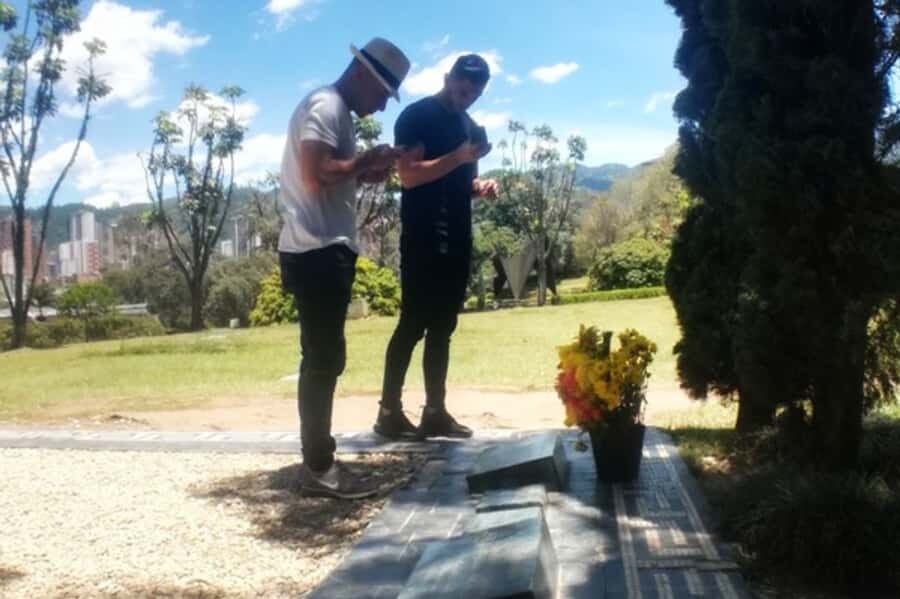
You start at Cementerio Jardines Montesacro, where the tour discusses Pablo Escobar’s grave. The framing here is important: the discussion isn’t only about who he was, but about what shaped the environment he came from, and the causes and consequences that followed.
Because the admission is free and the stop is about 30 minutes, this works well as a tone-setter. You’re given context before you move into neighborhood-level realities. It’s a chance to recalibrate your thinking away from pop-culture certainty.
A consideration: this is a cemetery. Even with a guide steering the conversation toward lessons and multiple perspectives, it will still feel somber. If you’re sensitive to heavy themes, mentally budget for a slower emotional ramp-up.
Stop 2: Los Olivos neighborhood and what the “death-site” can teach
Next is the Los Olivos neighborhood, where the tour visits the property where Escobar died. This stop is shorter (about 20 minutes), but it’s focused on turning one moment in time into bigger questions.
You’ll hear about the horizons and scope of both public policies and drug trafficking—and how that legacy still echoes. That’s the value of pairing a famous figure with a specific place. You get out of myth mode and into cause-and-effect thinking.
One practical note: since this stop is brief, you’ll likely get the most out of it if you come ready with a couple of questions. The tour format is private, so your guide can tailor answers to what you’re trying to understand: the political side, the social side, or the human side.
Stop 3: Comuna 13—street art, memory, and real community interaction
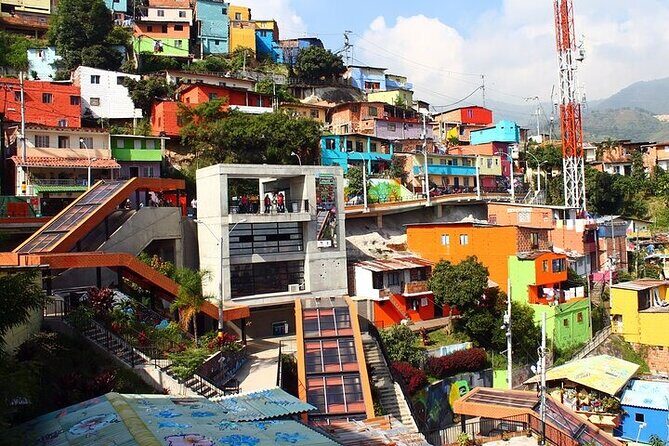
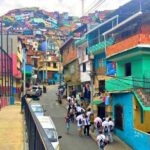
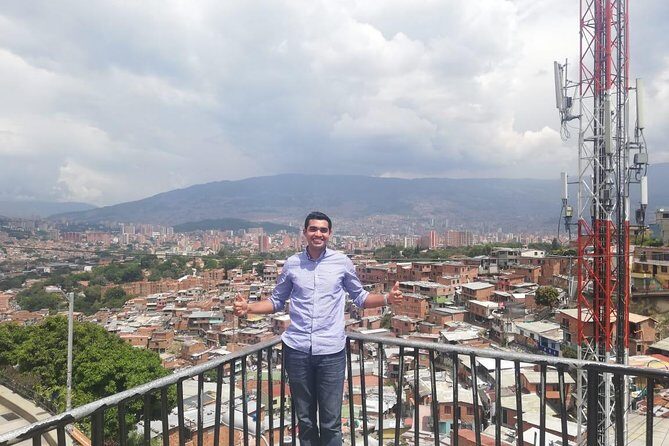
Comuna 13 is the heart of the tour’s contrast. The time here is about 1 hour 30 minutes, and it’s designed to compare Medellín’s social investment results with the dark days of the past. The tour also connects Comuna 13’s history to broader context in Colombia and Medellín across past decades.
What I like most about this stop is that it treats urban art as more than decoration. The guide explains how graffiti becomes a form of urban expression, relief, and inclusion. In other words: it’s not only aesthetics; it’s language—messages tied to the community.
The tour also includes interaction with locals and a way for visitors to contribute to the community. That can change how the visit feels. Instead of standing back and photographing, you’re there to learn what the art and the neighborhood mean in daily life.
Other Pablo Escobar history tours we've reviewed in Medellin


What to watch for while you’re there
- Look for the meaning in the murals, not just the style. Each graffiti has a special meaning in this storytelling.
- Take your time with the walking pace. Comuna 13’s best moments come from small details and side views, not just the biggest wall.
- Ask your guide to connect past to present. The best explanations land when they show how the neighborhood moved forward.
A consideration: you’re visiting a living neighborhood, so keep expectations realistic. This isn’t a curated museum environment. The value comes from the mix of art, local life, and the guide’s ability to frame everything respectfully.
Why the guides seem to matter a lot here
The strongest feedback from past guests centers on how guides handle Comuna 13 storytelling. Names that come up include Juan, Daniel, Mateo, Cesar, and Andres. The common thread is how well they connect the facts to what you can see on the street—without turning the tour into glorification.
If you want your day to feel like it has a personal guide rather than a scripted lecture, this is one place where that difference shows.
Stop 4: Parque Memorial Inflexion—honoring victims and resisting myth
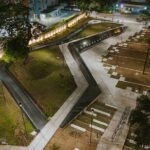
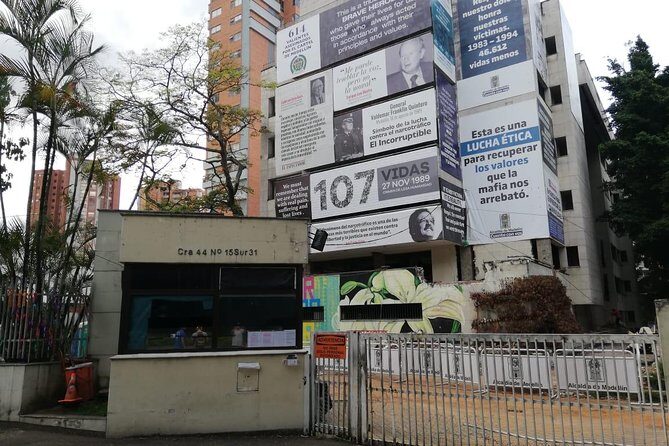
You finish at Parque Memorial Inflexion, a memorial park created by the city hall and the National History Memory Center. It’s built for people who lost their lives during a period of about 10 years (1983 to 1994).
This stop does something the Escobar story often misses: it challenges idolization. The tour explicitly notes that many people glorify figures like Pablo Escobar after watching shows and series, then redirects you toward the damage left behind by narcoterrorism and the culture of easy money.
You’ll spend about 30 minutes here. The memorial is also described as honoring 46,612 people killed by Escobar’s bombs and greed, which adds weight to the conversation. This is where you’re asked to shift from spectacle to human cost—grief, integrity, and what role models mean for future generations.
A consideration: emotionally, this is the hardest stop on the tour. It’s also the most clarifying, because it keeps the focus on victims rather than the myth around the man.
How long is the day, and what pacing feels right?
The tour runs about 4 to 5 hours total. That timeframe is a sweet spot for people who want Comuna 13 without turning the day into a half-marathon.
Because it’s private, your guide can often adjust timing based on what you care about most. Some visitors even highlight that they could spend more or less time at each area depending on preferences. If you’re the type who wants extra time for murals, tell your guide early.
Also, a/c vehicle time helps you recover between heavier stops. Even though the duration isn’t short, the flow keeps the stops from feeling like they’re layered back-to-back without breathing room.
What’s included (and what you’ll want to plan for)
Here’s what you’re covered for:
- Air-conditioned vehicle
- Parking fees
- Coffee and/or tea
- Insurance
- Hotel pickup and drop-off (not just a “meet at this point” situation)
Admissions at each stop are listed as free (including the cemetery stop, the Los Olivos property visit, and both memorial-related stops).
What’s not included:
- Lunch
That last one is the big planning piece. Since you’ll be out for most of the day, it’s smart to eat before you go or plan a post-tour meal. If lunch is a must, choose something close to where you’ll end up, because you’re finishing at Parque Memorial Inflexion.
Price and value: where the $92.86 fits in
At $92.86 per person, this tour isn’t the cheapest way to see Comuna 13. But the value is tied to what you avoid: transport hassle and time loss. You’re paying for a private vehicle, insurance, and a guide who can connect the sites into one coherent story.
It also helps that every stop is ticket-free, so you’re not stacking entry fees on top. For a day that includes a cemetery context lesson, a neighborhood walk, and a memorial experience, the price starts to make sense as a bundled cultural and historical program.
One more value point: “just your group” usually means you get a more personal explanation of what you’re seeing. In Medellín, that can be the difference between a confusing walk and a meaningful one.
Who should book this tour—and who might skip it
This tour is a great match if you want:
- Medellín history with real-world context, not only entertainment facts
- Comuna 13 with someone who can explain mural meaning and historical contrast
- A guided approach that focuses on consequences and victims, not Escobar as a hero
You might choose something else if:
- You want a light, casual neighborhood photo walk only
- You strongly prefer not to visit memorial spaces tied to violence and grief
- You don’t want a structured day with set stops (the format is built around them)
Should you book this Pablo Escobar + Comuna 13 tour?
I’d book it if you’re trying to understand Medellín in a way that TV clips usually don’t. The mix of Cementerio Jardines Montesacro, Los Olivos, Comuna 13, and Parque Memorial Inflexion gives you both the story and the response—what happened, and what people do afterward.
Skip it if you’re only chasing street art photos with no interest in the heavy context. This is a meaningful, sometimes painful route, and it’s designed to be reflective, not just scenic.
If you do book, I’d plan to bring your questions. With private guiding, you’ll get more out of the day when you ask what you’re really trying to understand—how violence shaped Medellín, how policies and crime interacted, and why Comuna 13 murals matter.
FAQ
How long is the Pablo Escobar and Comuna 13 tour?
It runs about 4 to 5 hours.
Is this a private tour?
Yes. It’s private, and only your group will participate.
What stops are included?
You’ll visit Cementerio Jardines Montesacro, a property in Los Olivos neighborhood, Comuna 13, and Parque Memorial Inflexion.
Is lunch included?
No. Lunch isn’t included.
Are tickets required for the stops?
Admission tickets are listed as free for the stops.
What’s included in the price?
The price includes an air-conditioned vehicle, parking fees, coffee and/or tea, and insurance, plus hotel pickup and drop-off.
What if the weather is bad?
The experience requires good weather. If it’s canceled due to poor weather, you’ll be offered a different date or a full refund.