Ajiaco starts with the right tubers. In Medellín, Sabor Colombiano Cooking Studio is a home-kitchen style class where you grind corn for arepas and learn how Colombian seasoning shifts by region. It runs about 3 hours 30 minutes with a small crew and a full meal at the end, not just a tasting bite.
What I like most is the hands-on pace and the way the hosts, including Juan Diego, Ana, and Odilia, guide you step-by-step without making it feel stiff. The second big win is that you sit down to a four-course spread you helped make, including shrimp cocktail, homemade arepas, a Santafereño ajiaco soup, and bread pudding for dessert.
One possible drawback: this is capped at 6 people and held in a private home, so it’s not for you if you want a big, city-tour style atmosphere or lots of stopping-and-starting around town.
In This Review
- Key highlights to know before you go
- El Poblado meeting point and how this 3.5-hour class feels
- The cooking flow: arepas, shrimp cocktail, coastal drinks, ajiaco, and bread pudding
- Arepas: corn-grinding technique you can repeat at home
- Ajiaco in practice: learning why tubers change the bowl
- Hosts who adapt: allergies, kids, and a relaxed pace
- Price in context: what $100 buys you in Medellín
- Should you book Sabor Colombiano Cooking Studio?
- FAQ
- Where does the cooking class start in Medellín?
- How long is the Sabor Colombiano Cooking Studio experience?
- What is the group size limit?
- Is the experience offered in English?
- What’s included in the meal?
- What dishes do you make during the class?
- Will the activity end where it starts?
- Can I get a confirmation at booking?
- Is there a mobile ticket?
- What’s the cancellation window for a full refund?
- Are service animals allowed?
Key highlights to know before you go
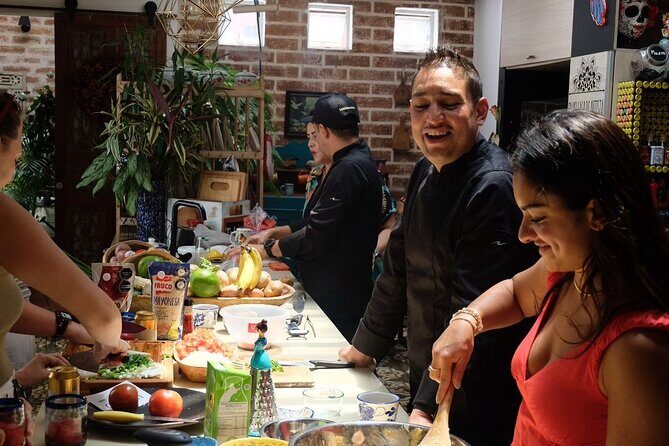
- Small group (max 6) means you get real attention while you cook.
- English-led instruction makes it easier to follow the why, not just the how.
- Corn-grinding arepas: you learn technique, not shortcuts.
- Santafereño ajiaco tuber lesson: you understand what each ingredient brings to the bowl.
- Eat as you cook, plus photos/videos so you can stay present.
- Allergy and family-friendly flexibility based on what the day needs.
El Poblado meeting point and how this 3.5-hour class feels
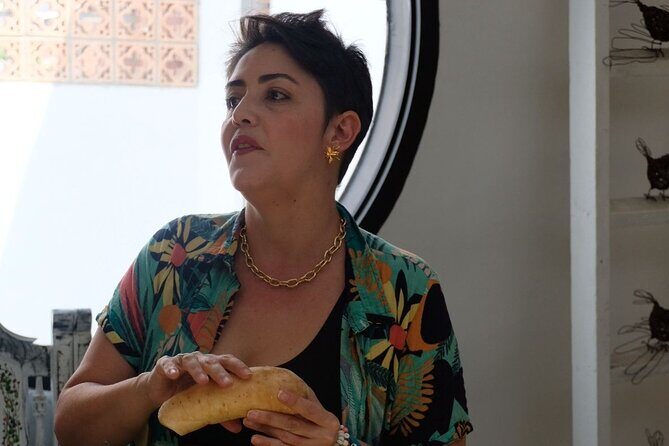
This class starts in El Poblado, at Urbanización Torres De La Visitación 1Cra. 29e #4 Sur-94. That matters because El Poblado is where you’ll find lots of visitors, but it also keeps things practical: it’s near public transportation, so you’re not relying on a private car just to get to class. And it finishes back at the meeting point, so you can plan your evening without guessing.
The format is small and human. With a maximum of 6 travelers, you’re not stuck watching from the sidelines. You can work at your own speed, ask questions, and actually see how ingredients come together. That’s a big deal in a cooking class, because Colombian food isn’t only about flavor. It’s also about texture, timing, and how you choose and handle ingredients.
If you’re booking, note that this kind of experience tends to be scheduled ahead. It’s often booked about 30 days in advance, so don’t wait until the last week in Medellín if you’re set on doing it.
A house-based setting has its own vibe. Expect a warm, close, sit-and-cook feeling rather than a formal studio atmosphere. That can be exactly what you want, especially if you like learning in a real kitchen with real routines.
Other cooking classes in Medellin
The cooking flow: arepas, shrimp cocktail, coastal drinks, ajiaco, and bread pudding
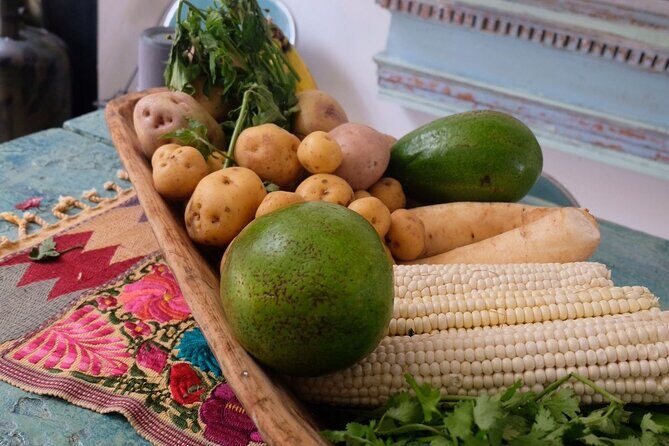
The most useful way to think about the class is as a four-course meal plus the lessons that make those dishes make sense.
First, you arrive and settle in. The hosts take time to guide you on ingredient selection and what each item is doing in the final dish. This isn’t just trivia. When you understand the role of an ingredient, you can adjust later on your own.
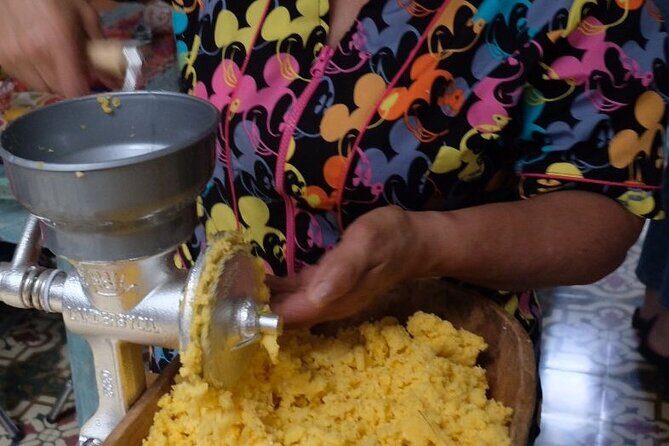
Then the hands-on part starts. You’ll work on corn for arepas, including grinding your own corn. From there the class moves through a sequence of flavors and techniques that connect coastal and interior Colombian tastes. One part you should expect is learning drinks from the coasts, which adds a nice contrast to the heavier comfort-food energy of the soups and breads later.
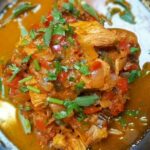
Next comes ajiaco. You don’t just taste it and move on. You learn the Santafereño ajiaco side of things, including how the tubers fit into the soup. Ajiaco is comfort food, but it’s also ingredient logic: different tubers contribute different textures and body to the broth.
Finally, you get dessert. Bread pudding closes the meal, which is a good choice because it rounds out the experience from savory to sweet without turning the class into a baking-only marathon.
A key practical bonus: you eat as you cook. That changes the tone. You don’t feel like you’re sprinting through recipes only to enjoy the results at the end of the night. Instead, you get steady payoffs, and the lessons land better because you taste while the food is still in progress.
Arepas: corn-grinding technique you can repeat at home
Arepas are the star for a reason. They’re simple on paper and tricky in real life. The class approach helps because you’re not just following directions. You’re learning how the ingredients behave.
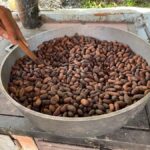
Grinding corn yourself gives you a feel for the starting point. That matters, because arepas depend on the corn dough’s texture and how it holds together. If you’ve ever made arepas at home and found them dry, dense, or crumbly, that’s usually a dough issue. Working the process in the class makes it easier to spot what’s happening with your own dough later.
The best practical takeaway is that you’ll learn the mindset behind the dish. The hosts explain how the preparation can vary across regions. That means your goal isn’t to copy one arepa forever. It’s to understand why one version might be softer, another more firm, and another more flavor-forward.
Also, arepas are a great anchor dish for your memory. You’ll likely be thinking about them after your Medellín trip because you can recreate them. Compared with lessons that only stay on the plate, arepas give you a repeatable home project.
If you’re cooking with someone new to Colombian food, arepas help too. They’re friendly to beginners, and the class structure gives you guidance on ingredient choices and technique so you don’t feel lost.
Ajiaco in practice: learning why tubers change the bowl
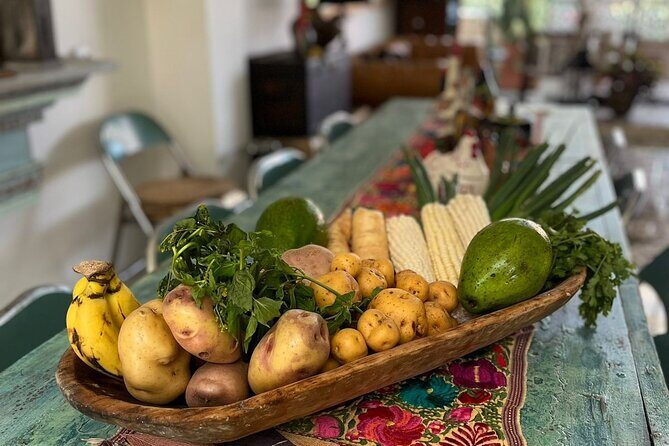
Ajiaco can feel like a single dish until you really pay attention. This class turns it into a lesson in ingredient roles, especially the tubers used in a Santafereño version.
What you’ll appreciate is that the instruction focuses on selection. You’re learning how each tuber contributes to texture and soup body, not just what goes into the pot. That’s the kind of explanation that actually helps you next time you cook, because it teaches you what to swap if you can’t find one item.
And because you’re in a teaching kitchen setting, you get feedback as you go. You’re not waiting for the final result to find out you missed a step. That reduces the frustration that can come with soups, which often need timing and correct simmering.
Ajiaco also works well in this format because it’s comforting and filling. After the hands-on arepa steps, you get a warm, satisfying payoff that makes the rest of the meal feel cohesive.
One more plus: the class frames Colombian food through seasoning and preparation. That lens helps you see beyond taste. You start understanding how regional differences shape the food, and you’ll likely read Colombian menus differently after.
Hosts who adapt: allergies, kids, and a relaxed pace
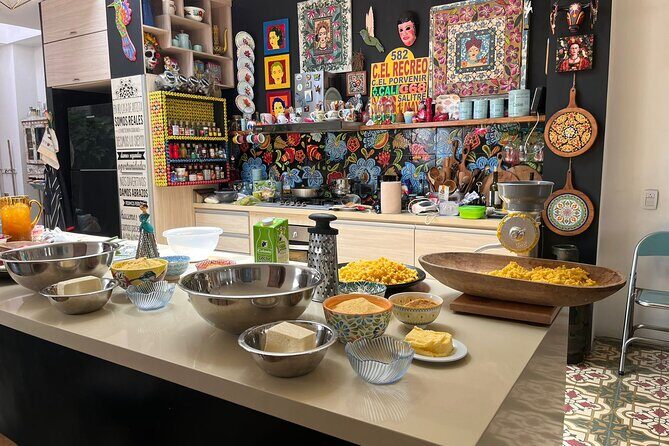
The standout here is how the hosts make the class feel like it belongs to you. Juan Diego, Ana, and Odilia run it with a steady mix of structure and flexibility.
You’ll get real reassurance if you have dietary needs. For example, if allergies are part of your planning, the class can adapt based on what you share ahead of time. That’s not a small thing. Cooking classes often have one fixed plan, but this one makes room to adjust.
Family comfort is also part of the story. One class experience included a six-month-old nephew, and the hosts supported with a blanket and toys. Even if you’re not traveling with a baby, that tells you the tone: the class is designed to keep everyone comfortable instead of forcing people to endure an uncomfortable setup.
The pace matters too. Reviews describe a process where you can do as much or as little as you want. That’s perfect if you’re a confident cook and want to move quickly, or if you just want to participate without stress. You still learn, but it doesn’t feel like a test.
One extra practical perk: they take photos and videos during the session. So while you’re cooking and eating, you don’t have to hand your phone to someone and beg for shots at every step. You can stay present for the important moments.





Price in context: what $100 buys you in Medellín
At $100 per person for about 3.5 hours, you’re paying for more than a meal. You’re paying for guided cooking in a small group, plus the food itself—four courses are part of the deal.
Here’s the value math that tends to matter in real life:
- You get instruction that helps you cook the dishes again later.
- You get a full meal, not just a sample.
- The class size is small, which usually means more attention than you’d get in a big group format.
Is $100 cheap? Not exactly. But when you compare it to the cost of eating out plus the cost of a true class with hands-on time, it lands as reasonable—especially since you’re leaving with both skills and a full stomach.
Also, if you’re traveling with a friend or family member, this format can feel like better value because the cap is low and the teaching attention stays steady. That’s often what makes the class feel worth it.
This is best for people who like learning through doing. If you’d rather only watch chefs work, this may feel too hands-on. If you like cooking, it’s a strong match.
Should you book Sabor Colombiano Cooking Studio?
I’d book it if you want a small-group Medellín experience focused on real cooking, not a performance. The combination of corn-ground arepas, ajiaco ingredient learning, and a four-course meal is exactly the kind of day that sticks with you after the trip.
I’d think twice if you’re looking for a large-group city tour or a class that feels like a commercial cooking school. This is a home-kitchen style experience with a max of 6, so the vibe is personal and close.
FAQ
Where does the cooking class start in Medellín?
It starts at Urbanización Torres De La Visitación 1Cra. 29e #4 Sur-94, El Poblado, Medellín, Antioquia, Colombia.
How long is the Sabor Colombiano Cooking Studio experience?
It lasts about 3 hours 30 minutes.
What is the group size limit?
The class has a maximum of 6 travelers.
Is the experience offered in English?
Yes, it is offered in English.
What’s included in the meal?
You’ll prepare and eat a four-course meal, including shrimp cocktail, ajiaco soup, homemade arepas, and bread pudding for dessert.
What dishes do you make during the class?
You make arepas (including grinding corn), a Santafereño ajiaco soup, plus shrimp cocktail and bread pudding.
Will the activity end where it starts?
Yes, the activity ends back at the meeting point.
Can I get a confirmation at booking?
Yes, confirmation is received at the time of booking.
Is there a mobile ticket?
Yes, a mobile ticket is included.
What’s the cancellation window for a full refund?
You can cancel up to 24 hours in advance for a full refund.
Are service animals allowed?
Yes, service animals are allowed.