REVIEW · MEDELLIN
Comuna 13 Tour with Cable Car Ride
Book on Viator →Operated by MEDELLIN TRAVEL GROUP · Bookable on Viator
One ride up the cable car changes your perspective fast. This Comuna 13 tour pairs metro-and-cable-car views with a guided walk through the neighborhood’s murals, plus real context on how it shifted from fear to everyday life. I love the mix of skyline views and street-level storytelling, and I love that guides like Camilo (community leader on weekends) bring personal, human details. The main drawback to plan for: the area can feel busy and you may be approached to buy things while you’re walking.
You’ll be stepping into a place with a complicated past and a confident present. The best part is how the guide keeps the story grounded in what you can see—painted walls, viewpoints, and everyday corners—rather than lecturing from far away. If you’re expecting a quick photo stop, you may want to choose your pace and ask your guide where the most meaningful murals are.
In This Review
- Key Highlights You’ll Feel Immediately
- Cable Car Views Above El Poblado: The Easy Part That Feels Big
- Meet at Poblado Metro and Get Moving With the Right Shortcut
- The Metro-to-Cable-Car Combo: Why It’s Worth the Effort
- The Bus Ride Up: Where the Scenery Turns Into a Story
- Exploring Comuna 13 Murals: Art That Actually Has a Location
- Viewpoints and the “Walking Up” Reality Check
- When the Tour Feels Too Short: Timing and How to Avoid Regret
- Price and Value: What $27 Actually Buys You
- Guides Make the Difference: Camilo, Walter, Carolina, and More
- Safety, Comfort, and Group Energy on Public Streets
- Who Should Book This Comuna 13 Tour (and Who Might Skip)
- Should You Book This Comuna 13 + Cable Car Tour?
- FAQ
- How long is the Comuna 13 tour?
- Where do we meet for the tour?
- Does the tour include the cable car ride?
- What should my fitness level be?
- How many people are on the tour?
- Can I cancel for a refund?
Key Highlights You’ll Feel Immediately
- Cable car panoramic ride from the metro area up toward Comuna 13
- Small group size (max 20) so it feels more like a real walk than a parade
- Local guide storytelling that explains the neighborhood’s troubled past and the transformation
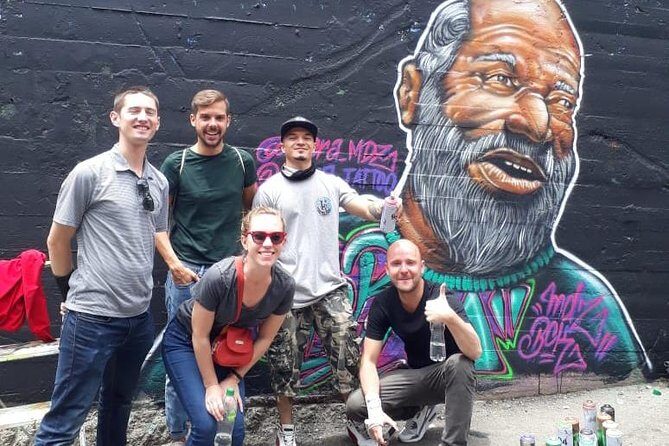
- Street art focus with colorful murals and other public artwork you can actually walk to
- Metro + bus + cable car routing that saves you from guessing transit on the fly
Cable Car Views Above El Poblado: The Easy Part That Feels Big
The tour starts in the El Poblado area, and before you even reach Comuna 13 you get the “wow” moment: Medellín’s cable car ride. This is one of those experiences where you feel the city open up around you. From up high, the scale of the hills and the way neighborhoods stack on slopes becomes obvious fast.
Even if you’ve never used a cable car before, the ride is straightforward. The guide helps you move as the group heads from the metro system to the cable car stations, so you’re not standing around figuring out where to go while other people drift off in every direction.
If you like transit-based travel (getting around like locals), this part is especially satisfying. You’re not just looking at Medellín—you’re riding through it.
Other Comuna 13 graffiti tours we've reviewed in Medellin



Meet at Poblado Metro and Get Moving With the Right Shortcut
Your starting point is Estación Poblado del Metro at Cl. 14 #50-88, near the main station entrance area by the ticket booth. The meeting is simple: show up at the agreed spot, meet your guide, and then you’ll be taken to the metro for the next leg.
Why I like this setup: it respects your time. Medellín is built for moving efficiently, and the tour uses that. You skip the guesswork of which line to take and you’re guided through the handoffs between metro and cable car.
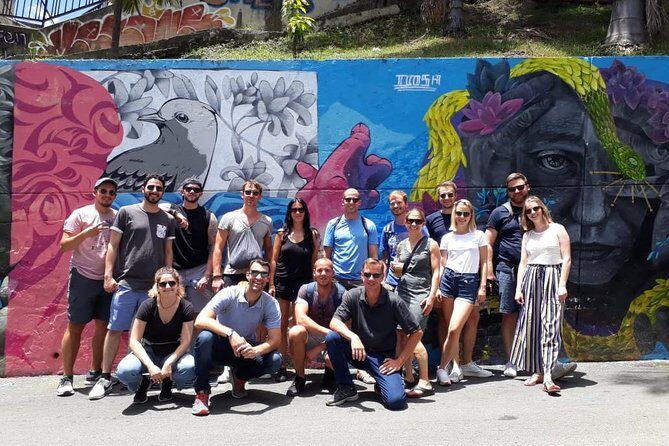
Group size matters here. With a maximum of 20 travelers, you get enough people for energy but not so many that everyone turns into a bottleneck. That balance tends to make the transport feel calm.
Also, the tour is described as being near public transportation, which is a big deal for a neighborhood like Comuna 13 where local context and routing matter.
The Metro-to-Cable-Car Combo: Why It’s Worth the Effort
The itinerary is built around this idea: you learn what you’re seeing by experiencing the routes locals use. The metro carries you toward the cable car connection, and then the cable car takes you up for those panoramic views.
That sequence helps in a practical way. When you later walk around Comuna 13, you’re not only staring at murals. You understand the terrain. You can better read the neighborhood’s layout because you’ve already seen the vertical logic from above.
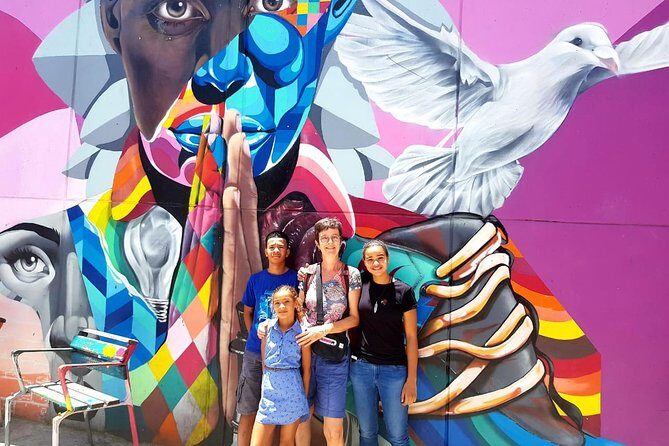
If you want a specific photo or a famous viewpoint angle, this is where your guide’s local know-how can help. Some guides are known for steering people toward the better viewpoint stops and quicker routes for the iconic Karol G hands photo angle.
The Bus Ride Up: Where the Scenery Turns Into a Story
After the cable car portion, you’ll take a short bus ride to reach Comuna 13 itself. This isn’t filler. It’s what keeps the tour on track and helps you spend more of your time on the walking portion where the murals and explanations happen.
Then the guide sets the scene: Comuna 13’s past was violent and painful, and the present is the result of long-term change. The best guides don’t sugarcoat it, but they also don’t trap you in doom. They show how daily life rebuilt itself—through community effort, public art, and reclaimed spaces.
Some guides seem to do this with a special style. For example, guides like Walter are described as able to explain the complicated history clearly and respectfully, while still pointing out resilience and what the neighborhood looks like today. You feel the difference when the story connects directly to the street corner you’re standing on.
Exploring Comuna 13 Murals: Art That Actually Has a Location
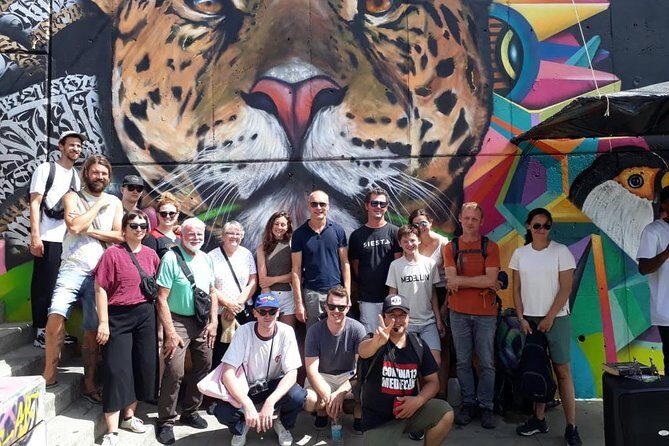
Once you’re in Comuna 13, the tour becomes a walking exploration focused on colorful murals and street art. This part is the heart of the experience: you’re not just viewing art like it’s wallpaper. You’re walking close enough to see scale, detail, and the way murals claim public space.
The murals are paired with history and context. Expect the guide to point out how the neighborhood changed and why certain pieces matter. This is also where you might notice extra visual elements that make the place feel distinct—street art layered with everyday signs of life.
Depending on timing and what’s happening in the neighborhood, you may also see community energy like street performers or activities. Some guides—such as Camilo—are described as having close ties to local kids and weekend community work, which can add a very personal dimension to what you see.
One more practical note: Comuna 13 is active. It can feel busy, and people may approach you to sell things as you walk. That doesn’t mean you should avoid the tour. It just means you should keep your eyes on your guide and plan to move when it’s time to move.
Other cable car and Metrocable rides we've reviewed in Medellin





Viewpoints and the “Walking Up” Reality Check
This is not a completely flat stroll. You’re dealing with a hillside neighborhood. The tour info calls for a moderate physical fitness level, and that matches what most people feel once the walking starts.
The good news: guides usually manage the pacing and routes so the experience stays doable. The tour’s structure—cable car for altitude gain, then guided walking—helps break up the effort. Still, wear shoes you trust, and don’t treat this like a casual mall walk.
If you’re traveling with kids, older adults, or anyone who gets tired easily, ask your guide early about pace and rest stops. Many guides are flexible in how they manage time—some have even accommodated family groups where an older traveler needed extra care.
When the Tour Feels Too Short: Timing and How to Avoid Regret
The stated duration is about 4 hours 30 minutes. That’s enough time to see a lot, but Comuna 13 can’t really be rushed if you want to understand it.
A couple of realities can affect how it feels:
- If your start time shifts or the group moves faster than expected, you might not get as much walking time as you wanted.
- If your tour is small—sometimes it can feel more like a private tour—the guide may naturally spend extra time with you.
What you should do: arrive ready to go. If you’re late, you can lose minutes before the cable car ride. And if you’re hoping to buy snacks or support local businesses, plan it as part of the walk rather than assuming there will be long “free exploration” blocks.
Also, keep expectations grounded: the point isn’t only photos. It’s learning how this place transformed, so if you rush past murals to chase a checklist, the experience can feel thinner than it should be.
Price and Value: What $27 Actually Buys You
At $27 per person, this tour is priced in a way that can feel surprisingly fair for the mix of transport and guided time. You’re not just paying for someone to walk with you—you’re paying for a guided route that ties together the metro connection, cable car ride, and bus transfer, then wraps it in a narrative you can’t easily stitch together on your own.
A big value piece is that the cable car admission is marked as free (no extra add-on ticket cost). That matters because it prevents the tour from feeling like a “tour fee” plus separate transit expenses.
That said, value depends on how the day flows. If the schedule turns into long stops where you’re mostly waiting, you might feel you paid more than you wanted. The best-run tours keep you moving between meaningful street-level moments, with the guide using the walking time to explain what you see.
If you’re the type who likes DIY travel, you could technically figure out the area on your own. But this tour is built to reduce friction and improve context—especially the history portion and mural guidance that connects the art to the neighborhood’s story.
Guides Make the Difference: Camilo, Walter, Carolina, and More
A recurring theme in how this tour is experienced is that the guide shapes the emotional tone and clarity.
Some guides are highlighted for different strengths:
- Camilo: described as deeply involved with the community, including weekend work with kids, and able to connect history to daily life.
- Walter: described as warm, approachable, and able to explain painful history without turning it into a cold lecture; also helpful for finding good viewpoints and quicker routes.
- Carolina: described as making the group feel connected while explaining history in a way that lands.
- Claudio, Christian/Cristian, Annie, Espero, and others: described as enthusiastic, flexible, and comfortable walking the neighborhood with you.
The practical takeaway for you: if your guide asks questions or invites interaction, lean into it. These tours work best when you treat it like a conversation, not a guided bus ride.
Safety, Comfort, and Group Energy on Public Streets
Comuna 13 isn’t a closed museum. It’s a working neighborhood. That means you should expect normal street contact: people selling things, lots of movement, and an environment that feels more real than staged.
Where the tour tends to help is in keeping you oriented. You’re never alone with unclear directions. The guide manages transitions between metro, cable car, bus, and the walking routes.
Many people also come away feeling safe when the guide leads clearly and keeps the group together. Still, use common sense: keep your phone secured while walking, don’t drift away for long photo detours, and follow the timing cues your guide gives you.
One thing I’d keep in mind: if you’re traveling with someone who wants a totally independent “we’ll meet you later” style, this tour may frustrate both of you. The best results come when you stay with the group and let the guide pace the experience.
Who Should Book This Comuna 13 Tour (and Who Might Skip)
I’d recommend this tour if you:
- want more than street photos and want the story tied to the murals
- like using local transport like the metro and cable car as part of the travel
- appreciate small-group guided walking (up to 20 people)
You might consider skipping or adjusting expectations if you:
- hate guided walking tours and want full independence
- expect a long, slow museum-style pace with lots of free time
- dislike places where you might get approached while you’re moving around
It’s a powerful experience when you treat it as learning on foot. If you treat it as a checklist, you’ll miss the best parts.
Should You Book This Comuna 13 + Cable Car Tour?
Yes, I think you should book it—especially if Comuna 13 is a “must-see” stop on your Medellín trip. For the money, you’re getting a smart transport combo, clear guidance in a complex neighborhood, and a street-art walk that comes with context.
Just go in with the right mindset: wear good shoes, expect some street bustle, and follow the guide so you can actually connect the murals to the history. If you do that, the cable car views plus the mural walk feel like more than entertainment—they feel like understanding.
FAQ
How long is the Comuna 13 tour?
It’s about 4 hours 30 minutes approximately.
Where do we meet for the tour?
You meet at Estación Poblado del Metro, Cl. 14 #50-88, El Poblado, Medellín, near the main ticket booth area.
Does the tour include the cable car ride?
Yes. The group takes the metro to the cable cars for a ride with panoramic views, and then continues on to Comuna 13.
What should my fitness level be?
You should have moderate physical fitness, since the tour includes walking in a hilly neighborhood.
How many people are on the tour?
The tour has a maximum of 20 travelers.
Can I cancel for a refund?
Yes. You can cancel for a full refund up to 24 hours before the experience’s start time.